
Resources
- Breakfast in the Classroom fact sheet (pdf)
- Breakfast for Learning (pdf)
- Breakfast for Health (pdf)
- USDA’s 10 Reasons to Try Breakfast in the Classroom (pdf)
- More USDA information
- National Dairy Council success stories
- Best Practice Guide (pdf) – National Food Service Management Institute
- California – California Food Policy Advocates information
- New York – Final Report on Classroom Breakfast Project (pdf)
- Oregon – Department of Education information
- Wisconsin – UW Cooperative Extension and WI Dept. of Public Instruction information
- NYC SchoolFood Breakfast in the Classroom Video
- San Diego Unified School District Breakfast in the Classroom Video
- New Mexico – Breakfast After the Bell
FRAC is a member of the
Partners for Breakfast in the Classroom,
an initiative that aims to boost participation in school breakfast. Funded by a grant from the Walmart Foundation, the initiative will dramatically boost breakfast participation by supporting breakfast in the classroom programs in five high-need school districts (Dallas, Little Rock, Memphis, Orlando and Prince George’s County, MD.)Other members of the Partners for Breakfast in the Classroom include:
Watch the Webinar:
Why Expanding School Breakfast Participation is Important
Expanded availability, accessibility, and participation in the School Breakfast Program is one of the best ways to support the health and academic potential of children, particularly low-income children. Adequate nutrition and freedom from hunger are absolutely essential for good health and academic success, and yet these goals are not always achievable for families who are struggling to make ends meet.
To learn more about the benefits of school breakfast, check out these issue briefs highlighting the links between school breakfast and favorable education and health outcomes:
Key Strategies for School Breakfast Expansion
Significant progress has been made in recent years to expand participation in the School Breakfast Program, however, there is ample opportunity for continued growth. As more and more school districts successfully increase participation in the School Breakfast Program, proven and effective strategies have emerged:
STRATEGY: Make breakfast part of the school day.
Making breakfast a part of the school day dramatically increases participation by making it convenient and accessible to all. Whether breakfast is served in the classroom, from carts in the hallways, or before second period, the flexibility to allow children to eat in the morning during the school day is essential to ensure optimum participation.
Alternative Breakfast Service Model Options.
There are several alternative service models that have been proven to increase participation in the School Breakfast Program and each can be adapted and customized to fit the unique needs of a school. Compare the most effective alternative breakfast models with FRAC’s Choosing a Breakfast Service Model Chart (pdf).
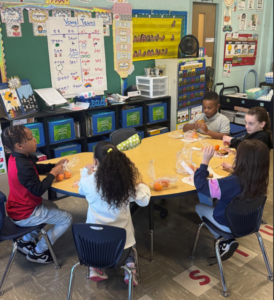
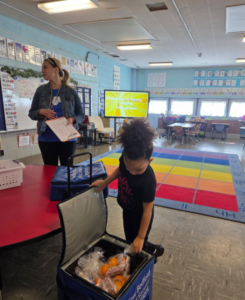
Breakfast in the Classroom: Offering breakfast in the classroom, where students eat breakfast in the first 10-15 minutes of the school day, dramatically increases participation. Breakfast meals can be delivered to each classroom or picked up on the way to class.
Grab and Go Breakfast: Serving breakfast from carts in the hallway or from the cafeteria to be eaten on the way to class or in the first 10-15 minutes of the school day provides flexibility for schools while increasing participation.
Second Chance Breakfast: Breakfast is served from the cafeteria or carts in the hallway after first period during a morning break, allowing students who arrive later or are not hungry first thing in the morning to get a healthy breakfast.
STRATEGY: Offer breakfast free to all children.
Offering “universal” meals free to all children optimizes the impact of switching to an alternative breakfast model. The traditional means-tested school breakfast (in which the meal is free or the child pays, depending on family income) creates a sense among children that the program is just “for poor kids,” deterring participation by children from all income groups, including low-income children who most desperately need the school meal. This is especially a problem in middle and high school as awareness of the social context grows. By offering breakfast at no charge to all children—and children, of course, are free not to participate—“universal breakfast” ends the stigma, boosts participation among hungry children, and eliminates the burden of collecting fees.
Schools with a high percentage of free and reduced-price eligible children—75 percent and above– generally are able to make up any lost revenue from paid meals due to increased participation and resulting economies of scale. The “break-even” point for each school or district is different, however, depending on labor and food costs, school size, and reimbursement amounts.
Schools and districts can decide between several methods for offering breakfast at no charge, including:
Addressing Implementation Barriers
Q. How do I start a breakfast in the classroom program in my school?
A. Start by contacting your school nutrition director or cafeteria manager, and tell them you are interested in breakfast in the classroom. They are responsible for operating the School Breakfast Program and will be the key contact for developing a way to serve breakfast in the classroom. If you are a school nutrition director who is interested in starting breakfast in the classroom, your first step is to build support within the school community, starting with teachers, school support staff, principals, and custodial stuff. A good way to build support is by showing a video on breakfast in the classroom:
Q. How can offering universal breakfast in the classroom– to all students at no charge, regardless of whether they qualify for free or reduced price meals—be financially viable for my school?
A. Offering breakfast free to all students simplifies the transition to serving breakfast in the classroom because fees are no longer collected. As a general rule, schools with 75 percent or more free or reduced-price eligible students can serve universal breakfast in the classroom and cover their costs through economies of scale. However, some schools with lower percentages of free and reduced-price eligible students can operate a universal classroom breakfast program that is financially self sustaining, depending on what their costs are (labor, food, etc.). Download this Excel file worksheet developed by the Dairy Council to help schools determine the viability of running this type of program.
Q. How do I choose which breakfast service model is right for my school or district?
A. There are several alternative service models that have been proven to increase participation in the School Breakfast Program and each can be adapted and customized to fit the needs of a school. Options include:
Schools and districts interested in implementing an alternative service model should consider a number of factors when deciding which model will be most appropriate and determining delivery, service, and clean up logistics. These factors include:
More resources on choosing an alternative service model:
Q. Does the entire school or school district need to do breakfast in the classroom?
A. Except for school districts where breakfast in the classroom has been mandated, there is no rule that precludes serving breakfast in the classroom in only certain schools in a district, or certain classrooms in a school. Implementing breakfast in the classroom school-wide, instead of only in certain classrooms, helps schools to make breakfast a part of the school culture and streamlines the process administratively for school nutrition staff. Each school will need to determine if offering universal free breakfast is financially feasible, however there are a number of high poverty districts that have successfully implemented breakfast in the classroom district-wide.
Q. Does a school district need additional funding to start a breakfast in the classroom program?
A. Schools and school districts across the country have been moving breakfast into the classroom, often without additional funding. However, some districts pursue grant funding to help cover start-up costs. Click here for a list of school breakfast expansion grant resources (pdf).
Q. Is there research that supports breakfast in the classroom?
A. Yes, research has been done on breakfast in the classroom that shows that children who participate are less likely to be absent, have fewer visits to the school nurse, and are less likely to be overweight. They eat more fruit, drink more milk and consume a wider variety of foods. Click here for a bibliography of research (pdf).
For a summary of research on the health and learning benefits of school breakfast, see FRAC’s publications Breakfast for Health and Breakfast for Learning.
Addressing Implementation Barriers
Q. Will breakfast in the classroom take away from instructional time?
The most common concern that teachers raise about breakfast in the classroom is that the program will take away from valuable instructional time. In practice, however, breakfast in the classroom generally takes about 10-15 minutes for children to eat, and is often done during morning activities, such as announcements, turning in homework or individual reading time so no instructional time is lost. Recognizing the academic and health benefits of breakfast, Education Secretary Arne Duncan issued a letter encouraging schools to adopt innovative service models to increase breakfast participation.
After breakfast in the classroom is implemented, teachers frequently report that their students’ productivity and ability to focus increases dramatically. Less time is spent on distractions such as behavior problems or illnesses caused by hunger. Many schools report fewer visits to the nurse’s office and disciplinary referrals. Moreover, many schools have reported decreased tardiness and absenteeism as students tend to come on time to get their breakfast. As a result, teachers are able to spend more time teaching and less on classroom management issues.
Many state superintendents of education, including California, Indiana, Michigan, New Jersey, and Pennsylvania, have issued policy memos clarifying that classroom breakfast meets the requirements of instructional time.
More resources on instructional time:
Breakfast in the Classroom and Instructional Time Fact Sheet (pdf)
State Instructional Time Documents (pdfs)
Q. How can I address concerns about pest control and sanitation when offering breakfast in the classroom?
A. Pest prevention is another concern often raised by teachers prior to implementing breakfast in the classroom. Strategies to address these issues vary by school but include:
Q. Do breakfast meals served in the classroom have to meet nutrition guidelines? What types of foods are typically served in the classroom?
Breakfast meals served as part of the federal School Breakfast Program must meet USDA nutrition guidelines. If meals are to be served in the classroom or from kiosks or carts, they should be easy to prepare, serve, and eat in order to limit issues with spills and trash.
Foods that require minimal preparation and work well when served in the classroom include:
More resources on menu planning for breakfast in the classroom:
Q. How can I work with principals and district administrators to start a breakfast in the classroom program?
A. Efforts to educate superintendents, principals, and other administrators about the learning, health, and budgetary benefits of increasing breakfast participation are essential to the continued expansion of the program. When superintendents and principals fully support alternative service strategies, participation in the School Breakfast Program can flourish. After implementing an alternative delivery breakfast model, participating principals often find that when students have eaten more time is spent on learning since there are fewer disruptions from tardiness, students misbehaving, or requests to see the school nurse.
There are several effective strategies for making the case for breakfast in the classroom to school administrators:
Q. How can I get buy-in from teachers to support breakfast in the classroom?
A. If engaged early on in the planning process, teachers can be an effective ally for engaging other stakeholders. Teachers see first-hand the effects of breakfast in the classroom—an improved learning environment where children start the day well nourished and ready to learn.
There are several ways to engage teachers and leverage their support:
The National Education Association Health Information Network has created a breakfast in the classroom toolkit for educators.
Q. Will breakfast in the classroom affect the workload of custodial staff?
A. Custodial staff may have concerns about increased amounts of work created by breakfast in the classroom, grab and go, or second chance breakfast. However, this is often not the case once the program is implemented. When breakfast is moved out of the cafeteria, the custodial staff no longer have to clean the cafeteria after breakfast before preparing for lunch. In addition, simple steps can be taken to manage spills or food waste in classrooms. Custodial or school nutrition staff should provide each classroom with a spray cleaner and paper towels or wipes and a designated trash can or heavy-duty trash bags. As part of their breakfast duties, students can help with collecting trash, wiping desks, and putting trash in the hall. Custodians can collect the breakfast trash from the hallway during the time that would have otherwise been spent cleaning the cafeteria.
Q. How can I address concerns and educate parents about offering breakfast in the classroom?
A. Promoting the School Breakfast Program and informing parents about breakfast in the classroom is crucial to driving participation and addressing any nutrition concerns parents may have. Parent groups should be engaged early on in the planning process and outreach should be continuous throughout the year. For example: