



Published September 15, 2026
This week begins Hispanic Heritage Month, first established in 1968 under President Lyndon Johnson. It was extended in 1988 to span from September 15 to October 15, a period that celebrates the independence of numerous Latin American countries from Spanish colonial rule.
This month allows all of our distinct cultures to celebrate our identity and who we are in this diverse country, and, as other administrations have officially proclaimed, “reaffirm that diversity is one of our country’s greatest strengths.” It acknowledges the contributions, strengths, and insights of Latino/a/e writers, scientists, soldiers, doctors, entrepreneurs, academics, farmers, and labor and government leaders.
For those of us in this community, the month is also an opportunity to challenge the notion that we are a single, homogeneous group. Our communities include people whose families have lived on this land for generations, including before parts of it became the United States, as well as those who arrived more recently. Every country, community, and family carries its own history, culture, and experience. Whether we hablamos español fluently, speak Spanglish, or do not speak Spanish at all, each of us is part of this diverse community.
No single label describes everyone. Some people identify as Hispanic, Latino/a, Latinx, or Latine, while others do not use any of these terms. These ongoing discussions highlight the community’s complexity, shaped by Indigenous histories, the transatlantic slave trade, European colonization, migration, and U.S. interventions across the Americas. Recognizing this complexity also means elevating Indigenous, Black, Afro-Latino, and other marginalized voices that have often been excluded or erased from traditional Latinidad narratives.
Celebrating our community’s contributions also requires recognizing the economic inequities many continue to face. Census data show that more than 15 percent of Hispanic people are still living below the poverty level, including 20 percent of those who are children and 18 percent who are elderly, compared to their White counterparts at 8 percent. Hunger and poverty disproportionately affect Latino communities, making access to effective nutrition programs especially important. In 2023, one in four Latinos in the U.S. experienced food insecurity. The Supplemental Nutrition Assistance Program (SNAP) is one of the nation’s most important tools for reducing food insecurity and poverty, providing food assistance to people of every racial and ethnic background.
U.S. Department of Agriculture (USDA) data illustrate that broad reach. USDA’s most recent Characteristics of SNAP Households report found that in fiscal year 2024, 36 percent of SNAP participants were non-Hispanic White, 25 percent were non-Hispanic Black, and 17 percent were Hispanic of any race.
Latino/a/e leaders are contributing vital experience, expertise, and perspectives to tackling hunger and poverty across the nation, especially as the leadership in the anti-hunger field often lacks full diversity of the communities it serves. Representation matters not because Latino leaders focus on issues specific to Latino communities, but because the people developing, advocating for, and executing anti-hunger policies should mirror the country’s diverse makeup and the communities affected by these policies.
Today’s advocacy stems from a history of Latino leaders like Dolores Huerta, who has fought for workers’ rights, dignity, and economic security for over 70 years. She organized for farmworkers, civil rights, and economic justice, improving protections and political representation for marginalized communities, laying a foundation for future advocates.
We also celebrate public service by recognizing Sen. Ben Ray Luján (D-NM) for his leadership and emphasizing that representation is important not only in public roles but also within the institutions that shape public policy.
In recognition of Hispanic Heritage Month, our Top 10 Latino/a/e Anti-Hunger Advocates to Watch celebrates leaders from across the country whose expertise, influence, and commitment are strengthening the movement to end hunger and poverty — and helping ensure a broader range of voices has a meaningful place at the table.
 Dolores Huerta is a labor and civil rights icon who co-founded the United Farm Workers, securing landmark protections like Aid for Dependent Families and disability insurance for farmworkers. Though best known for labor organizing, her decades-long fight against farmworker poverty has long intersected with hunger and food security. In recent years, she has continued this work directly, joining anti-hunger coalitions in California to oppose federal SNAP cuts under H.R. 1 and urging state lawmakers to fund food assistance for immigrants and other vulnerable populations, insisting there’s “no excuse” for such programs to go unfunded. |
 Sen. Ben Ray Luján has worked tirelessly to restore food programs and support the farmers who feed our communities. As Ranking Member of the Senate Agriculture Subcommittee on Nutrition, he has fought to protect and strengthen SNAP. In November 2025, he led the Senate Democratic Caucus in introducing legislation to repeal SNAP cuts enacted under H.R. 1, and during the government shutdown, he introduced a bill to stop the administration from withholding SNAP and WIC funding. He earned the James Beard Impact Award for his commitment to helping small farms keep their doors open, serving the public, and feeding seniors, kids, and veterans. |
 Dayana Leyva is a public health policy and advocacy professional focused on food access, nutrition security, and health equity. She co-led Colorado advocacy efforts that helped stop proposed SNAP restrictions, building a statewide coalition and coordinating a 2025 letter campaign that brought 70 handwritten letters from Colorado SNAP recipients to Washington, D.C., urging Congress to reject SNAP cuts. Her anti-hunger work builds on her experience in state health policy, including administering Colorado’s OmniSalud program and modeling coverage expansion for undocumented immigrants. As the daughter of immigrants, she brings lived experience together with policy analysis and coalition building to advance food, health, and economic security. |

Jessica Pino-Goodspeed is deputy director of public affairs at Hunger Solutions New York, where she has been an extraordinary advocate for child nutrition. She played a leading role in securing Healthy School Meals for All New York Kids, which brought universal school meals to the state, and previously championed New York’s “No Student Goes Hungry” program, expanding breakfast after the bell and banning meal shaming. Jessica has built powerful coalitions of child nutrition and education partners, leveraging them to protect and strengthen SNAP — connecting the dots so advocates for school meals, WIC, and Summer EBT also champion SNAP’s reach. |

Claudet Miranda-Zambrano is senior anti-hunger program associate at Maryland Hunger Solutions, working to maximize SNAP participation and address food insecurity statewide. She recently helped lead advocacy for HB 1458, SNAP for Refugees and Asylees, creating state-funded benefits for humanitarian populations who lost federal eligibility under H.R. 1. She also launched a Specialized Training Series for older adults, people with disabilities, and immigrant communities. Previously, she was an economic justice paralegal serving low-income and homeless individuals navigating public benefits. She holds degrees from George Washington University and is an evening JD candidate at the University of Baltimore, graduating May 2027. |
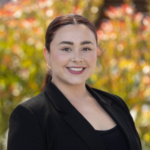
Hailey Solares is advocacy and policy manager at the Food Bank of Contra Costa and Solano, leading local, state, and federal anti-hunger advocacy. A first-generation American whose commitment stems from her own experience with homelessness and food insecurity in college, she has helped secure local emergency food funding, advocated for CalFood, CalFresh, and CFAP expansion at the state level, and engaged Congress on protecting SNAP federally. Central to her work is centering those most impacted — she has trained more than 40 community advocates to share their stories and engage policymakers. She holds a political science degree from UC Berkeley. |

Marco Alarid White is a public benefits attorney at the New Mexico Center on Law and Poverty, working to address hunger and improve public assistance programs for children and families. He advocates for greater access to benefits like SNAP through state and federal court, as well as community, administrative, and legislative forums. He recently won a case affirming mutual aid organizations’ constitutional right to engage in expressive food sharing. Marco brings a background in hunger relief work with food banks and pantries, and has advocated for people with psychiatric disabilities. He is a graduate of the University of New Mexico School of Law. |

Maricelis “Mari” Gonzalez is a Dominican-Puerto Rican advocate continuing her parents’ 35-year legacy of serving Massachusetts‘s immigrant community. Ten years ago, she became executive director of El Buen Samaritano, expanding it to two locations, building a volunteer force of 800-plus, and increasing food access amid supermarket closures. She kept doors open through the COVID-19 pandemic, the infant-formula shortage, and SNAP cuts, always ensuring families are served with dignity. This year, El Buen Samaritano was designated Worcester’s official survival center. Mari serves on the Make Hunger History Coalition, the Worcester Food Task Force, the DTA Advisory Board, and Governor Healey’s Latino Empowerment Council. |
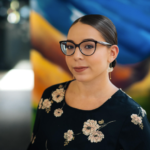
Mariah Guerrero is senior public policy manager at Hunger Free Colorado, leading state and federal advocacy on SNAP and food access. She recently co-led a campaign against proposed SNAP purchase restrictions that mobilized 90-plus testifiers and helped stop the proposal, and has driven statewide efforts to secure state investments protecting SNAP amid federal cuts. Rooted in her family’s lived experience with these systems, Mariah’s career spans direct service, nonprofit advocacy, and government, including roles in the Colorado House and U.S. Senate. She combines policy strategy, grassroots organizing, and storytelling to demystify policymaking and center community voices in decisions that affect them. |

Estela M. Reyes Rodríguez is advocacy director at the Instituto del Desarrollo de la Juventud (IDJ), where she advances policies that strengthen economic security and reduce hunger among children, youth, and families across Puerto Rico. For over a decade, she has worked alongside communities, youth, and civic leaders to ensure those most affected by food and economic insecurity have a voice in shaping solutions, drawing on her experience with the University of Puerto Rico’s Río Piedras community and the eight communities of Caño Martín Peña. At IDJ, she translates data, community knowledge, and lived experience into policy strategies that expand opportunity and combat hunger’s root causes for Puerto Rican families. She holds a graduate degree in social work from the University of Puerto Rico, Río Piedras Campus. |

Ashley Cruz is the advocacy manager at Feeding Texas where she supports advancing state and federal policy initiatives to help end hunger in Texas and strengthen the health and financial stability of Texas communities. Her work focuses on nutrition programs like SNAP. Ashley has served in this role for three years. Prior to joining Feeding Texas, she was the government relations coordinator for Planned Parenthood Texas Votes and previously worked at the Texas Capitol. |

Alexis Rodriguez is a Legislative Advocate for the County Welfare Directors Association of California (CWDA), bringing experience in policy advocacy and legislative casework across state and federal government. She began her career in Sacramento in Sen. Nancy Skinner’s office, staffing legislation and serving as a Capitol point of contact for constituents accessing social services. Most recently, she coordinated statewide advocacy with SEIU’s Building the California Dream Alliance on food security, housing, and childcare. She also interned in Rep. Rashida Tlaib’s D.C. office, supporting constituent casework on Social Security, healthcare, and housing. Alexis holds a bachelor’s degree in Justice Studies from San Jose State University. |