



Published October 21, 2026
October 19–23 is Farm to CACFP (Child and Adult Care Food Program) Week, which highlights the benefits of connecting child and adult care providers with local foods.
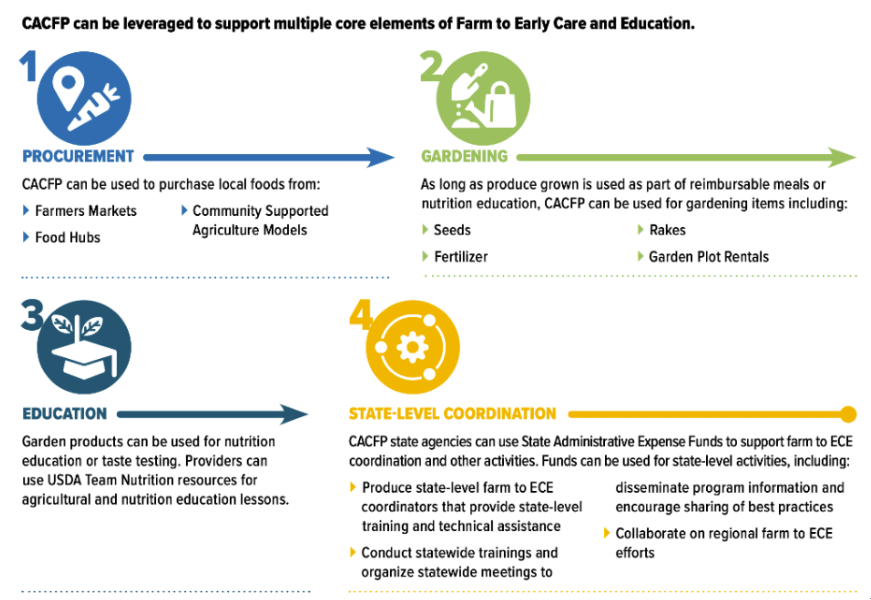
CACFP, a federally funded child nutrition program, helps child care centers, family child care homes, afterschool programs, emergency shelters, and adult day care centers serve nutritious meals and snacks. Farm to CACFP/Early Care and Education (ECE) can build on this foundation by bringing local foods, gardening, and food and agriculture education into care settings. Farm to ECE initiatives are community-based activities in various settings, including preschools and Head Start/Early Head Start, that support young children’s connections to fresh and healthy local foods and their engagement with local agriculture.
Better Nutrition Starts With Access
CACFP reimbursements help eligible providers cover the cost of meals and snacks that meet federal nutrition standards. This support is especially important for programs serving families with low incomes, where tight budgets and the cost of fresh food can be barriers. CACFP funds can help cover eligible costs for local food purchases, gardens, and nutrition education, making these activities more feasible.
A Win for Providers and Communities
Farm to CACFP benefits extend beyond the plate. Gardens and food-based learning can enrich early care curricula and engage families. Partnerships with farmers, food hubs, and distributors can help providers find seasonal foods and strengthen purchasing channels. Local growers gain reliable markets, while more food dollars stay in the community.
Call to Action
Every community should benefit from Farm to CACFP/ECE. Yet many providers face staffing shortages, inadequate reimbursement, limited storage or kitchen equipment, and difficulty finding suppliers. Small family child care homes and centers in under-resourced communities may face the greatest barriers.
Expanding Farm to CACFP/ECE requires stronger policies and greater investment. State agencies, policymakers, advocates, funders, and community partners can work together to:
- increase CACFP reimbursement rates;
- provide training and technical assistance on local procurement, gardens, and food education;
- reduce CACFP administrative barriers and streamline program requirements so providers can dedicate resources and time to Farm to CACFP/ECE; and
- expand grants and other funding for Farm to CACFP initiatives.
Learn more with FRAC’s Farm to ECE resources: Leveraging CACFP for Farm to Early Care and Education and Enhancing Young Children’s Access to Local Foods and Farm to ECE: Federal Funding Guide.