


Back to School 2026
School and afterschool meals help reduce hunger, support learning, and ease financial pressure on families. Visit FRAC’s Back to School hub to learn how these critical programs support children and families, and what you can do to protect them.
The School Breakfast Program provides millions of children a nutritious morning meal, helping families and ensuring that students have the focus and energy they need to get the most out of their school day.
Any public school, nonprofit private school, or residential child care institution can participate in the School Breakfast Program and receive federal funds for each breakfast served. The program is administered at the federal level by the U.S. Department of Agriculture (USDA), and in each state typically through the department of education or agriculture. To find the agency that administers the School Breakfast Program in your state, check USDA’s list of state administering agencies.
Quick Facts
- Nearly 15.4 million children participated in the School Breakfast Program (SBP), with just over 12.2 million children receiving a free or reduced-price breakfast, on an average school day during the 2023–2024 school year.
- Free and reduced-price breakfast participation increased by just over 900,000 children (8 percent) when compared to the 2022–2023 school year.
- The gap between school breakfast and lunch participation decreased in the 2023–2024 school year compared to the previous year, with 58.1 children receiving a free or reduced-price school breakfast for every 100 children who received a school lunch, compared to 57.4 per 100 in the 2022–2023 school year.

Urge Your Members of Congress to Cosponsor the Universal School Meals Program Act
Urge your Members to join the growing number of cosponsors on the Universal School Meals Program Act (S. 4518/H.R. 8798). This bill would create permanent nationwide Healthy School Meals for All, increase reimbursement rates for school meals, end lunch shaming, reimburse schools for meal debt, provide incentives for local food procurement, expand summer meal access, and expand the Child and Adult Care Food Program.
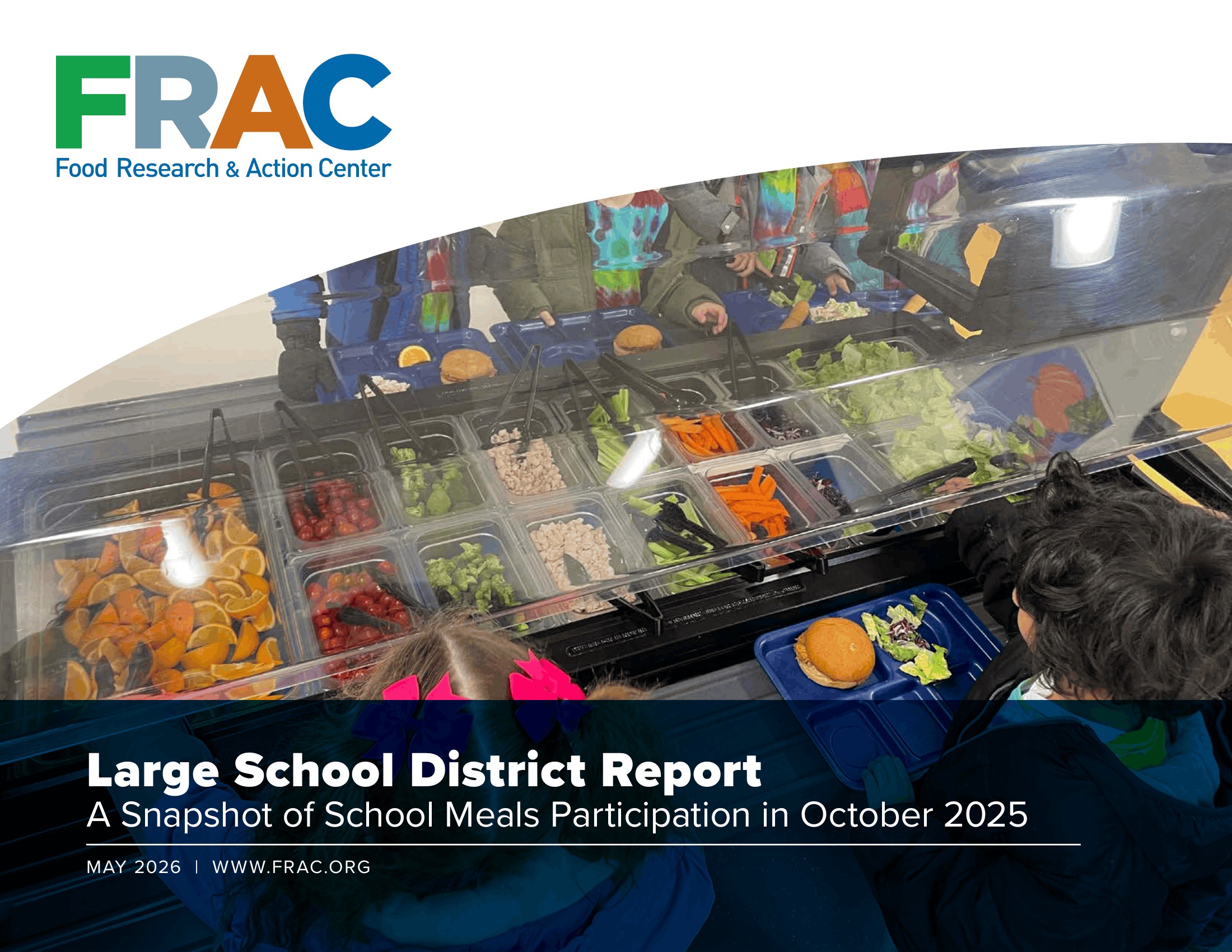
New Report: Large School District Report: A Snapshot of Participation and Operations in October 2025
Many large school districts across the country report significant challenges keeping children fed and school nutrition operations running effectively due to rising food and labor costs, inadequate federal reimbursement, and new federal policies.
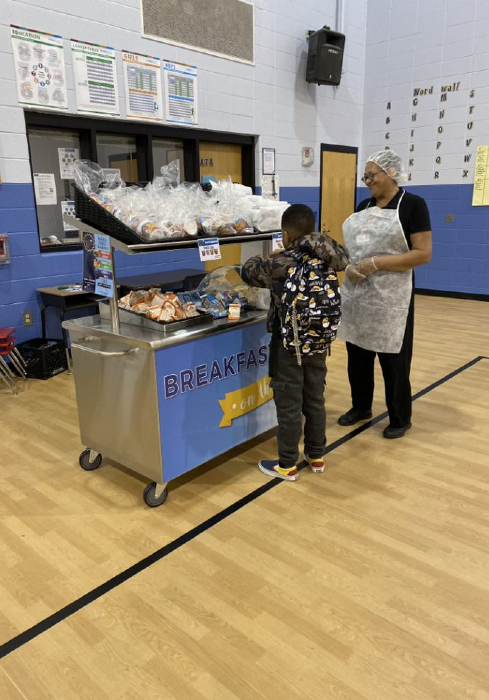
Creating a Healthier Future by Protecting and Strengthening the Child Nutrition Programs
The School Breakfast Program plays an important role in reducing childhood hunger, supporting good nutrition, and ensuring that students and young children are hunger-free and ready to learn and thrive. Learn how Congress can support the Child Nutrition Programs in FRAC’s 2026 leave behind.
Protect SNAP: Legislative Priorities
Cuts to SNAP threaten the child nutrition programs. Protecting SNAP is protecting America’s health, economy, and future.
Congress must take immediate action to ensure the Farm Bill — or any legislation — reverses the devastating cuts and harmful impacts on SNAP that were included in the budget reconciliation law (H.R. 1). Discover FRAC’s legislative priorities in this new one-pager.
Explore These Topics
- Benefits of School BreakfastStarting the day with a healthy school breakfast ensures that children have the nutrition they need to learn and thrive. A wide body of research supports the health and educational benefits of participation in the School Breakfast Program. Find out more about the research.
- School Breakfast Expansion StrategiesThe most successful strategies for increasing school breakfast participation are to serve breakfast after the bell and offer breakfast at no charge to all students. Find out how to make these strategies work in your state or community.
- Community Eligibility ProvisionCommunity eligibility allows high-poverty schools and districts to offer breakfast and lunch at no charge to all students and realize significant administrative savings. Many schools combine community eligibility with proven models like breakfast in the classroom to boost breakfast participation. Learn more about community eligibility and search our database of schools to find out if schools in your state or community are eligible and participating.
- State School Breakfast LegislationStates have passed a variety of types of legislation to increase school breakfast participation, including legislation for Breakfast in the Classroom. Find out more.
- Eligibility and ReimbursementsChildren from low-income households are eligible to receive meals for free or at a reduced-price based on their household income or participation in other government programs, such as the Supplemental Nutrition Assistance Program. Find out more about how children are certified for free and reduced-price school meals.
- Serving Breakfast in Rural School DistrictsSchool breakfast is particularly important for students in rural, low-income households who are more likely than their peers in metropolitan areas to live in food-insecure households, and, who often face additional barriers to accessing the program. Learn more in our fact sheet: School Breakfast in Rural Communities – Get the Facts.
FRAC Reports
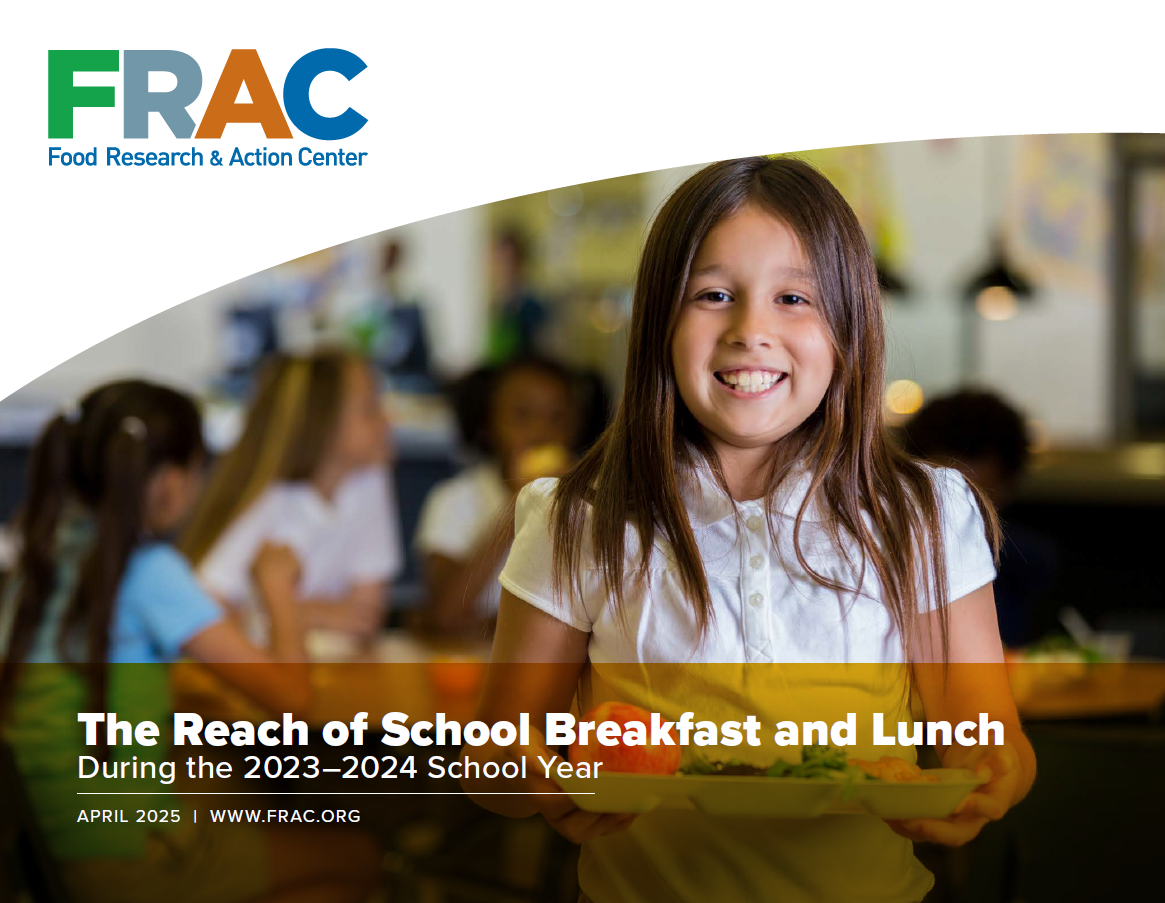
The Reach of School Breakfast and Lunch During the 2023–2024 School Year
Read More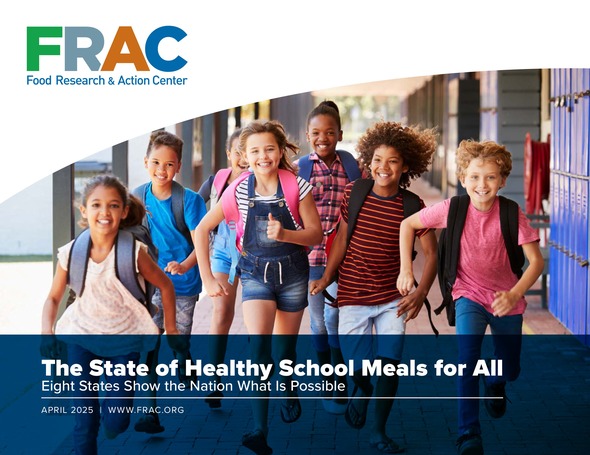
The State of Healthy School Meals for All: Eight States Show the Nation What Is Possible
Read More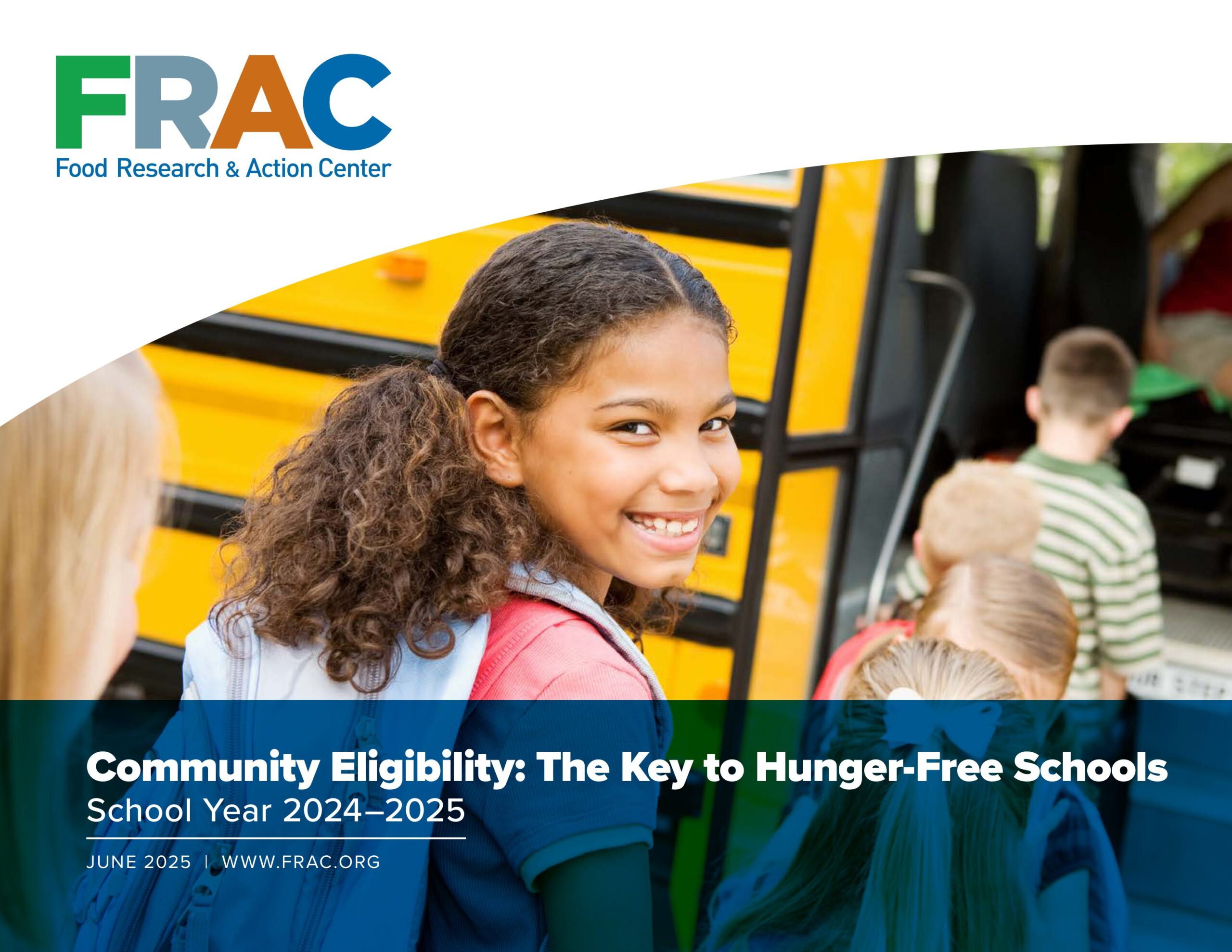
Community Eligibility: The Key to Hunger-Free Schools, School Year 2024–2025
Read More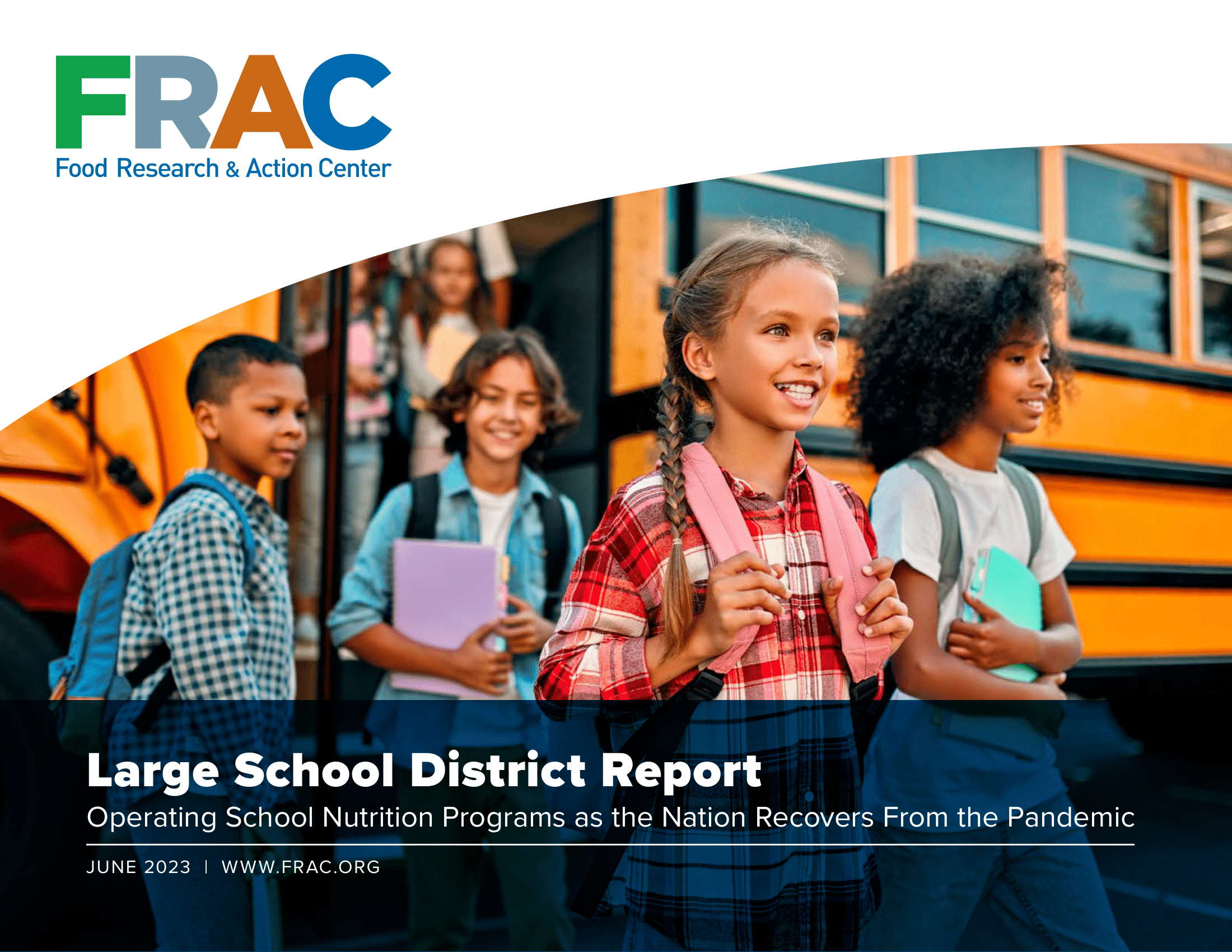
Large School District Report: Operating School Nutrition Programs as the Nation Recovers From the Pandemic
Read More
Tools You Can Use

The Connections Between Food Insecurity, the Federal Nutrition Programs, and Student Behavior
Find out more
Research Brief: Breakfast for Health
Read more
Research Brief: Breakfast for Learning
Read more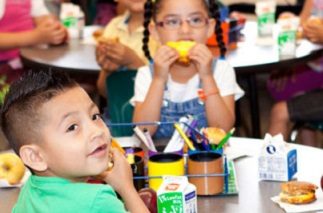
FRAC Facts: School Breakfast Program
Read more