


Published February 27, 2026
Every great hero’s journey starts with a moment of preparation — a chance to gather strength, sharpen focus, and step boldly into the day ahead. For millions of students across the country, that moment is school breakfast.
Research shows that strong school breakfast programs nourish both body and mind, helping students stay healthy, focused, and ready to learn. Yet despite its proven benefits, too many children begin their daily quest without this essential boost.
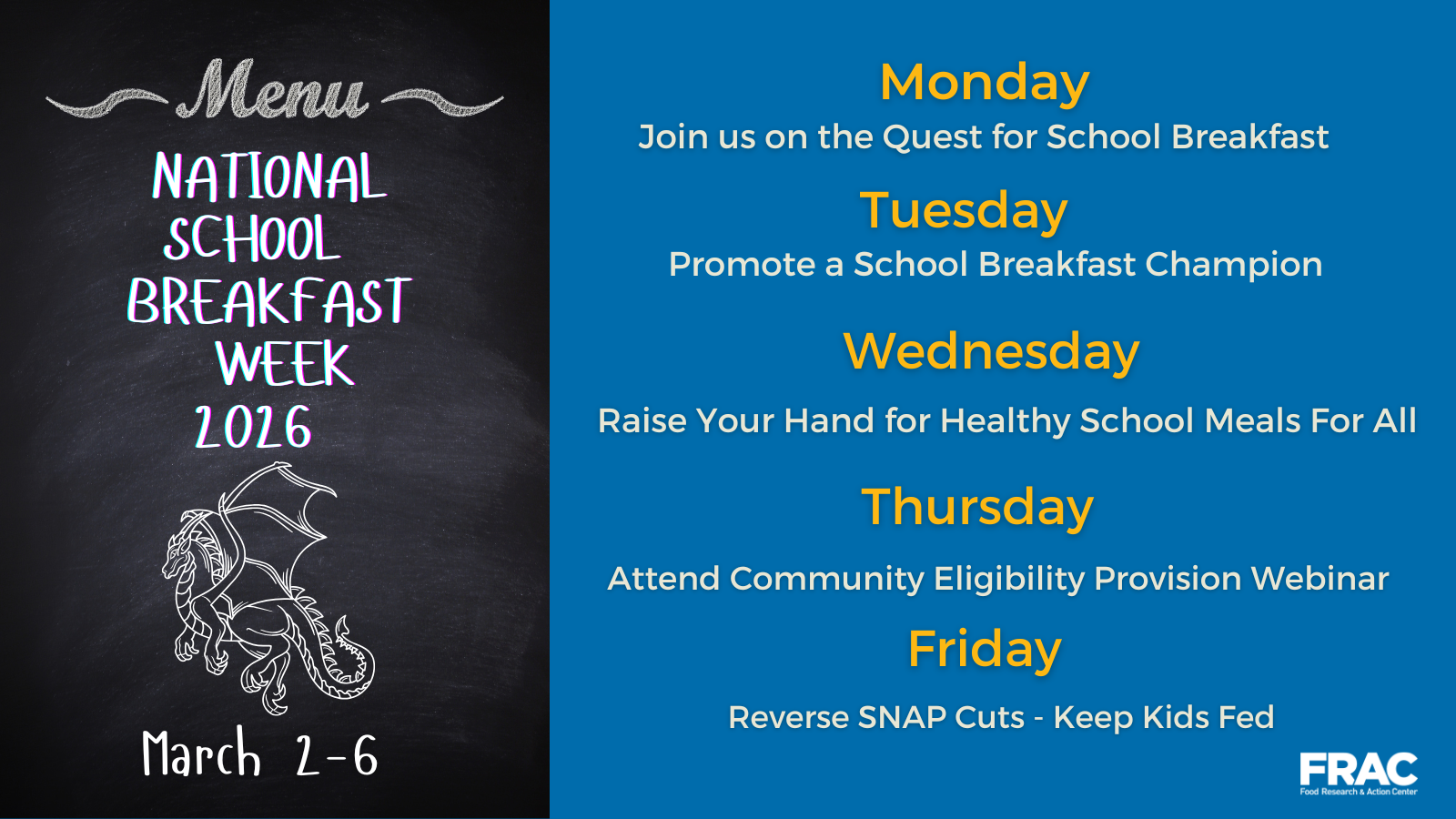
This National School Breakfast Week, March 2–6, the Food Research & Action Center (FRAC) is joining the School Nutrition Association and their theme, “The Quest for School Breakfast.” Our mission is to dismantle the barriers blocking breakfast access and unlock the full potential of every student.
Obstacles on the Path to Breakfast Access
Imagine a bridge to success that only half of young travelers can cross. That’s the reality today; while over 15 million children eat school breakfast on an average day, breakfast participation lags far behind school lunch.
Traditional breakfast models — meals served in the cafeteria before the school day starts, fees that families must pay, and the stigma surrounding breakfast participation — create roadblocks that keep many students from participating. Timing, cost, and social pressures become hidden traps that undermine children’s health and learning.
These barriers don’t just inconvenience students; they weaken their ability to thrive.
A New Threat Emerges: SNAP Cuts in H.R. 1 Hurt School Meals
Every quest has its villains, and in this story, the SNAP cuts passed in the budget reconciliation law (H.R. 1) pose serious harm.
SNAP benefits are a key nutritional support for families and also, a direct link to free school breakfast and lunch. When children lose access to SNAP, they also lose automatic eligibility for free school meals. Families and schools are left to navigate complicated paperwork, and many students fall through the cracks.
The SNAP cuts also jeopardize schools’ ability to implement the Community Eligibility Provision (CEP), a powerful tool in the fight against childhood food insecurity. CEP allows high-poverty schools to offer all students school meals at no charge, eliminating the need for school meal applications, reducing stigma associated with traditional school meals programs, and increasing participation in both breakfast and lunch. Without CEP, schools will be forced to return to the cumbersome application process, meal debt will rise, participation will drop, and student hunger will lurk in hallways and classrooms.
The Key to Unlocking Breakfast Access
Fortunately, the solution isn’t hidden in a treasure chest or guarded by a dragon. The key to unlocking school breakfast access is simple, proven, and within reach: offer all students free breakfast after the start of the school day.
When breakfast is free for everyone, stigma is reduced. When it’s served after the bell, timing and transportation barriers crumble. When it becomes a normal part of the school routine, nutrition equity grows.
Breakfast-after-the-bell models, such as breakfast in the classroom, grab and go kiosks, and second chance models, increase participation in the program and help to ensure every student begins their day with the nourishment they need to learn, grow, and succeed.
Join FRAC on the Quest for Student Success
Join FRAC this National School Breakfast Week as we spotlight the policies, strategies, and success stories that help schools expand breakfast access, while fighting against the harm caused by H.R. 1.
The quest for student success is a journey we can begin and win together, starting with one powerful step: ensuring every child has access to a healthy school breakfast that fuels their health and learning