


Published May 28, 2026
Early in May, the U.S. Department of Agriculture Food and Nutrition Service (USDA-FNS) finalized their updates to the SNAP retailer stocking standards. The new rule increases the required number of varieties in each food category, and the number of perishable items stores must carry to be eligible as SNAP vendors. These changes will primarily impact small stores, including bodegas and convenience stores, small grocery stores, and combination stores (stores that sell general goods, but also carry some food, like dollar stores), which make up about 70 percent of all SNAP retailers.
The USDA’s own analysis estimates that 5,000 stores will lose SNAP authorization due to the change in rules. Though they optimistically believe that all of these stores will make needed changes and apply for reauthorization, they fail to note in the analysis that there is a six-month waiting period before de-authorized stores are able to reapply. FRAC and other researchers believe that the likely effects are much greater: The stocking changes, combined with SNAP food choice restrictions in 23 states and the sharp decline in SNAP participation since January 2025, will push stores to drop out the SNAP program or close altogether due to decreased SNAP revenue and increased hassle. https://www.americanprogress.org/article/snap-cuts-are-likely-to-harm-more-than-27000-retailers-nationwide/Additional research estimates that 27,000 retailers will be affected by SNAP cuts alone. This leaves communities with less food access for both SNAP and non-SNAP participants.
These SNAP stocking rules are only one of three ways that vendors can qualify as SNAP retailers. Stores that meet these requirements, carrying a minimum number of varieties in each of the staple food categories (fruits and vegetables, dairy, breads and cereals, and meat, poultry, and fish), are technically authorized under Criterion A. The second way of qualifying is known as Criterion B; stores authorized this way have more than half of their sales in staple foods. This criterion is what makes butcher shops or produce stands eligible to accept SNAP. The third way a store can be approved as a SNAP retailer is under the “Need for Access” determination. That is, stores that aren’t eligible under Criterion A or B can still be considered for authorization “if they are in an area where SNAP clients have very limited access to food.”
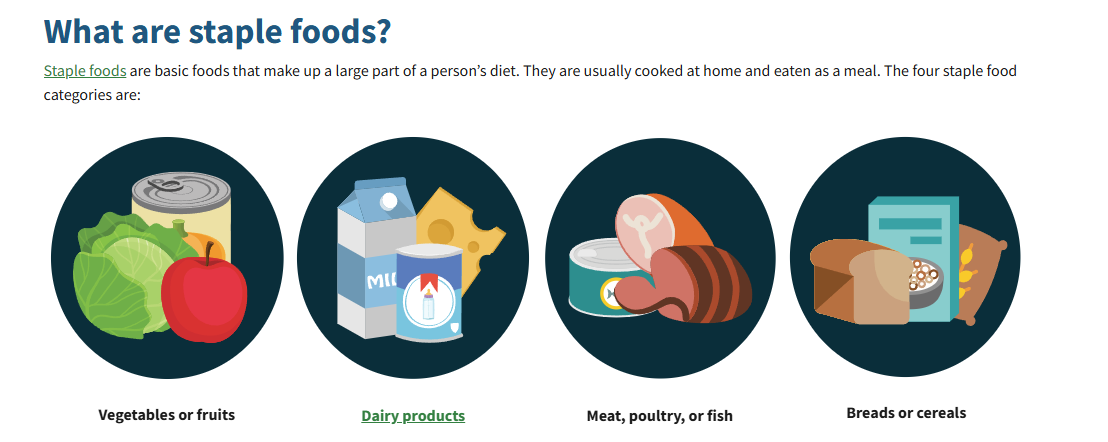
Image source: USDA
The big questions, then, are: (1) How is “Need for Access” defined; and (2) will this option for authorization ensure that communities are not left without a place to buy groceries?
Defining Need for Access
The SNAP regulations at 7 CFR 278.1(b)(6) address need for access. They say that a store can be SNAP-authorized if it’s located in an area with “significantly limited access to food” even if they don’t meet Criterion A or B. A USDA memo from 2020 describes how this is operationalized. If a vendor applies for SNAP authorization and is not a restaurant and doesn’t meet A or B stocking or sales requirements, it is automatically evaluated for meeting a need for access. First, FNS determines if the store is located in a low-income, low-access (LILA) area, a USDA Economic Research Service geographic measure of communities without adequate access to food retailers (you can view the map of LILA areas here). If it is, the store is then “evaluated in accordance with an established scoring methodology” using several factors:
- proximity to meeting Criterion A and B,
- distance from SNAP-authorized supermarkets and other SNAP-authorized stores,
- vehicle access rate from the American Community Survey,
- hours of operations, and
- history of SNAP violations at the store.
This methodological description raises more questions than it answers. What is the “established scoring methodology” and how often is it reevaluated? How many stores are authorized under the need for access framework, and what were their scores? Do stores remain authorized if a store that meets Criterion A or B is authorized nearby? And critically, when the Criterion A rules change, are stores that no longer qualify automatically reevaluated using the need for access scoring?
Can Need for Access Ensure Food Access for all SNAP Recipients?
The USDA has considerable latitude to determine if a store can be authorized because of a need for access. As one researcher points out, the SNAP regulations about need for access include the instruction that FNS should consider “any other factors which the FNS officer in charge considers pertinent to the application under consideration.” This language means that FNS has quite a bit of discretion to expand retailer eligibility. At times, FNS has been greatly concerned with access to retailers. In 2025, they published an extensive study of access to WIC-authorized vendors for WIC participants, and funded a follow-up study to better define access and provide tools for WIC state agencies to identify and address gaps in access.
However, it’s not clear that the current iteration of FNS finds geographic food access to be a critical factor in food security and well-being. The text of the final rule summarizing comments submitted on the proposed rule notes that the majority of opposition centered on “reduced SNAP household access to authorized stores and the creation of food deserts.” The final rule dismisses this critique, offering only online grocery shopping as a solution for households in areas without access to stores. Online grocery shopping does not solve all food access needs. It is not available to or used by most rural residents, can be unaffordable because SNAP benefits cannot be used to cover delivery fees, and can undermine essential local retail, as online ordering is dominated by the largest grocery retailers such as Amazon and Walmart. Further, one study found that using SNAP online opens participants up to increased surveillance, manipulative online marketing, and “pervasive promotion of unhealthy foods,” the opposite of USDA’s stated priorities.
Opportunities for Expanding Access
The good news is that changes to the Criterion A retailer stocking standards do not alter the need for access provision. FNS can define how a store meets a need for access and can expand that definition at will. FNS is urged to make its methodology public, develop a process to apply the need for access framework to stores that lose authorization due to the new stocking rules, and use its discretion to make sure that people in communities with few food retail options are able to use their SNAP benefits locally. The ability to accept SNAP is a lifeline for small stores — keeping stores financially stable and allowing them to stay open.