



Published May 8, 2026
The Senate now faces a defining choice. The House Farm Bill failed to meet the economic moment. It ignored the mounting pressures on American families, state governments, and local economies, while doing nothing to repair the most severe cuts to the Supplemental Nutrition Assistance Program (SNAP) in its history. The Senate must not repeat that mistake.
This is not simply a debate about food assistance. It is a test of whether Congress will respond to economic reality or deepen instability for families already struggling to stay afloat.
Families are being squeezed from every direction.
(1)
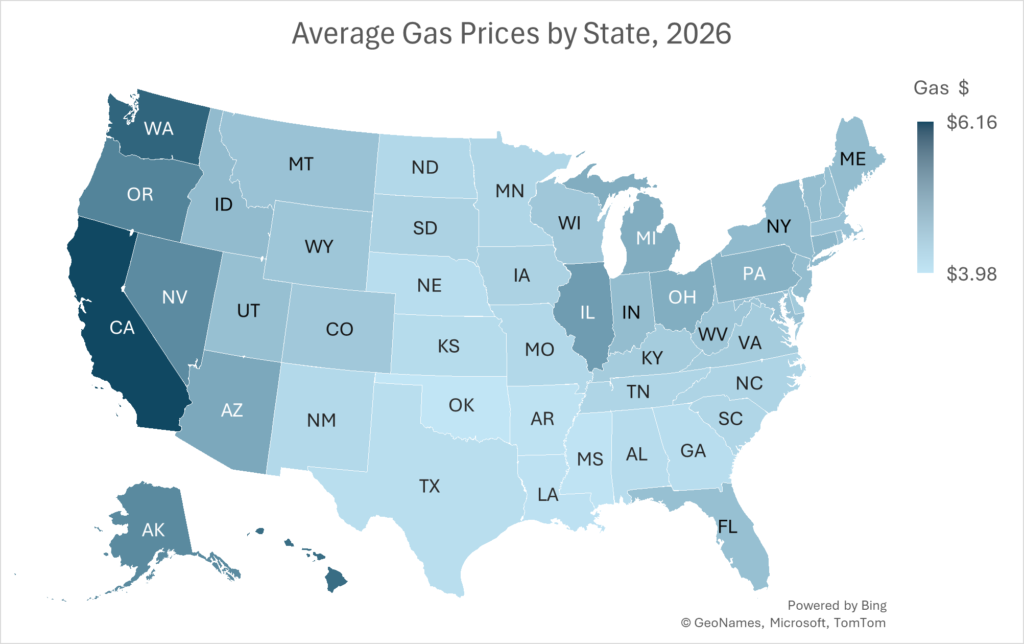
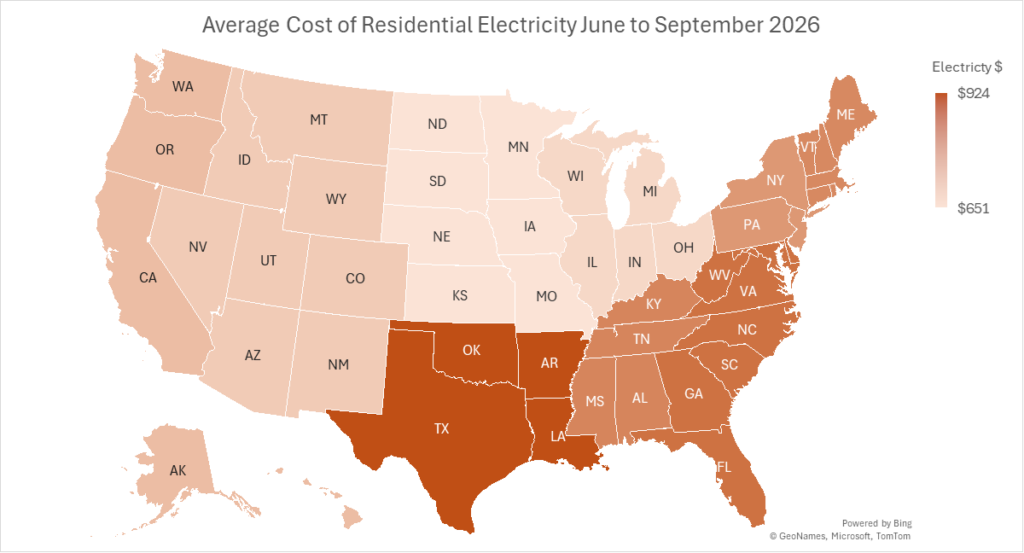
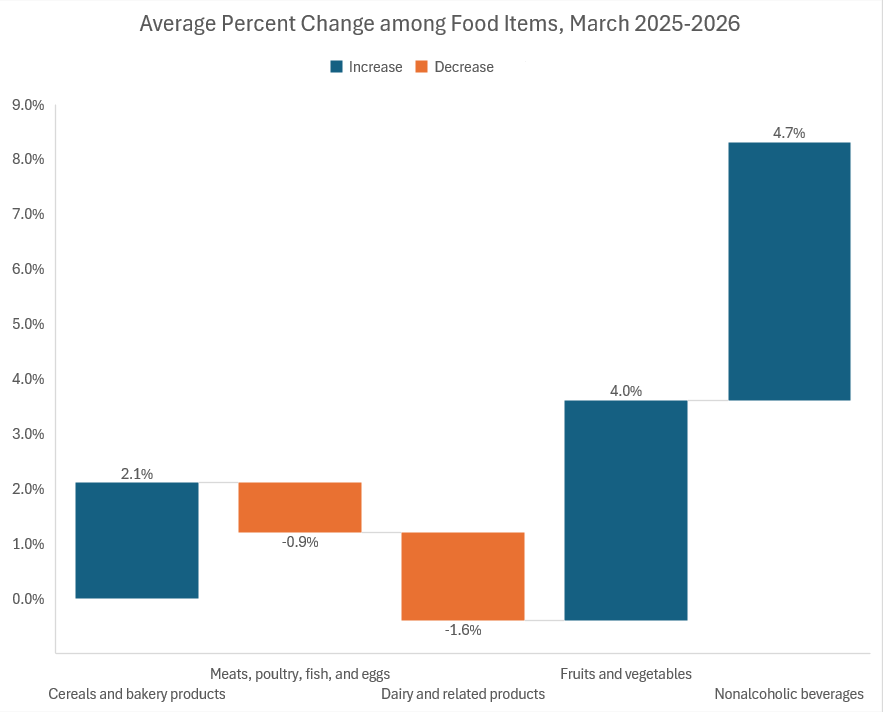
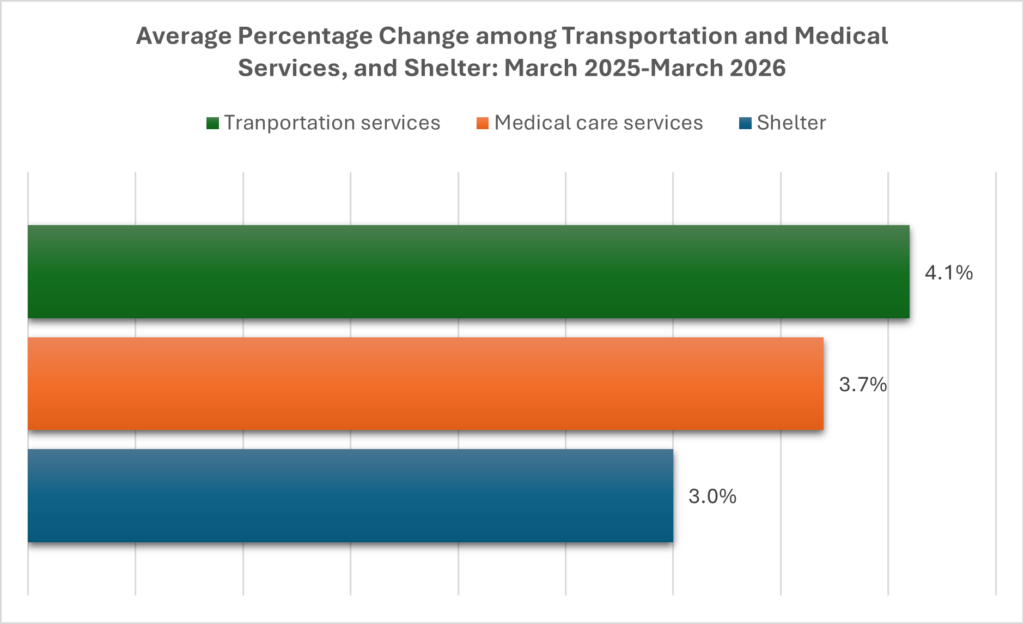
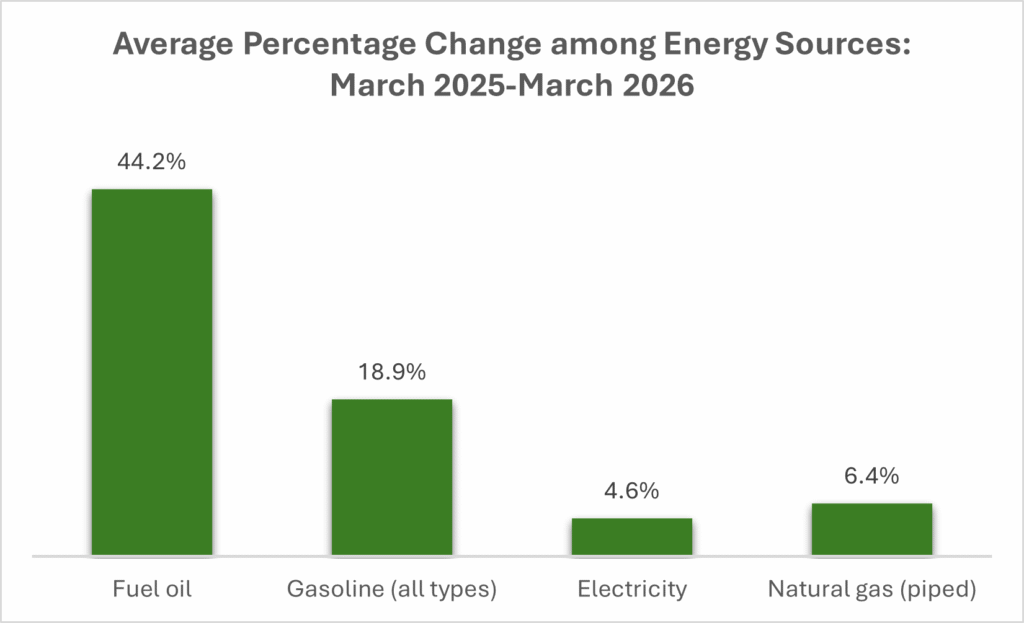
Families are experiencing ongoing high food prices, increasing utility bills, rising fuel costs, and sluggish labor market growth. Cooling expenses alone are expected to hit some of the highest levels in years, with one in six households already behind on energy payments. Food prices keep rising, and for low-income workers — many of whom are balancing multiple jobs, unpredictable hours, caregiving duties, and unstable income — there is very little financial margin remaining.
(2)
At the same time, state fiscal conditions are worsening. Surpluses accumulated during the pandemic have diminished. Rainy day funds, though still higher than pre-pandemic levels in many states, are starting to decrease. Costs related to Medicaid are growing; disaster recovery expenses are up; and revenues are leveling off.
And yet, rather than strengthening SNAP — the nation’s most effective anti-hunger and economic stabilization program — Congress has weakened it.
SNAP exists precisely because markets do not always provide economic security.
When families lose income, when costs rise, or when economic conditions deteriorate, SNAP helps households afford groceries while stabilizing local economies through consumer spending. That role is not incidental. Consumer spending drives approximately 70 percent of the U.S. economy. When families cut back because they cannot afford food, utilities, rent, and transportation, local businesses feel it, economic growth slows, and recession risks deepen. This is when SNAP should be protected, not undermined.
The House Farm Bill Failed to Meet the Economic Moment
Instead of responding to the rising hardship, the House advanced a Farm Bill that fails to address the damage already caused by the budget reconciliation law (H.R. 1) and ignores the structural threats facing the program.
For over 60 years, SNAP functioned as a key federal-state partnership: States managed the program, with the federal government fully funding food benefits and sharing administrative expenses. This structure embodied a core truth: Addressing hunger and promoting economic stability are responsibilities at the national level. H.R. 1 shattered that framework.
Starting in fiscal year 2027, states will share 75 percent of SNAP administrative costs, an increase from the current 50 percent. From fiscal year 2028 onward, for the first time, states will also need to contribute a portion of SNAP food benefits, calculated based on payment error rates.
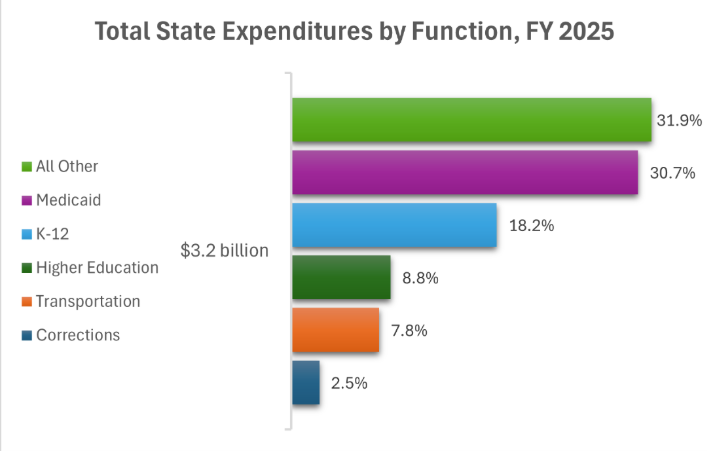
That is not a technical adjustment. It is a fundamental restructuring of SNAP. And it comes with enormous consequences because states cannot deficit spend. Unlike the federal government, states must balance their budgets annually. Every new federal cost shift forces impossible choices: reduce education funding, delay infrastructure investments, cut public health programs, constrain Medicaid spending, raise taxes, or reduce access to SNAP itself.
For the first time in the history of the program, SNAP becomes a direct state budget liability rather than a federally guaranteed economic stabilizer.
(3)
That contradiction matters. SNAP is supposed to expand during hardship — not contract because state budgets are under stress.
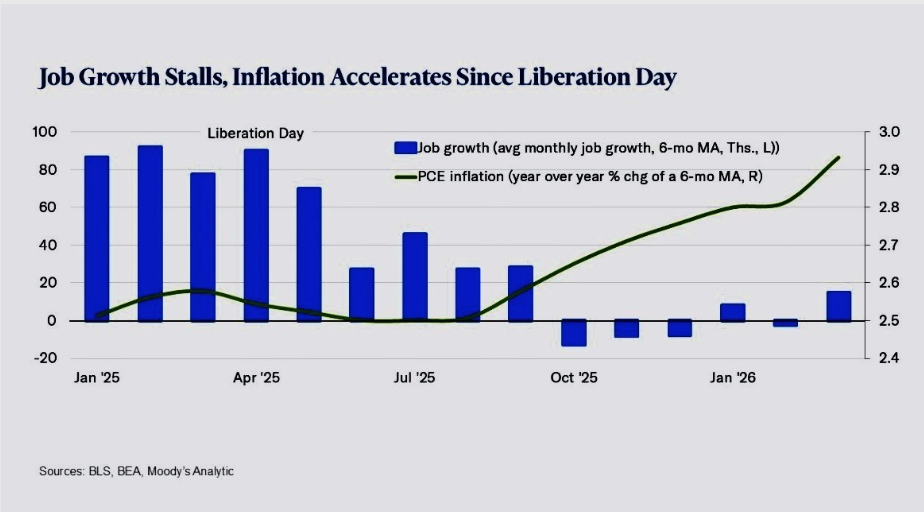
Congress has also expanded punitive SNAP time limits, even though decades of evidence show they do not meaningfully increase employment and data show a fragile job market has not added new jobs. Time limits do not create jobs. They do not increase wages. They do not solve unstable scheduling, transportation barriers, caregiving obligations, untreated health conditions, or age discrimination in hiring. What they do is increase hunger.
People lose food assistance not due to unwillingness to work, but because they struggle to meet strict reporting requirements while navigating unstable job markets. Many SNAP recipients are already employed, often holding multiple jobs or caring for family members while managing paid work. The idea that punitive time limits will somehow foster economic opportunity is fundamentally flawed: Hunger does not lead to prosperity.
When SNAP participation drops, its effects extend beyond individual households. Food banks experience higher demand, hospitals deal with poorer health outcomes, and schools see more child hunger. Local retailers lose spending, and cities and counties face increased homelessness and emergency costs. State budgets also feel the pressure downstream, while charity efforts cannot replace the scale of federal nutrition support. For every meal provided by food banks, SNAP offers many more. These consequences are real and already evident.
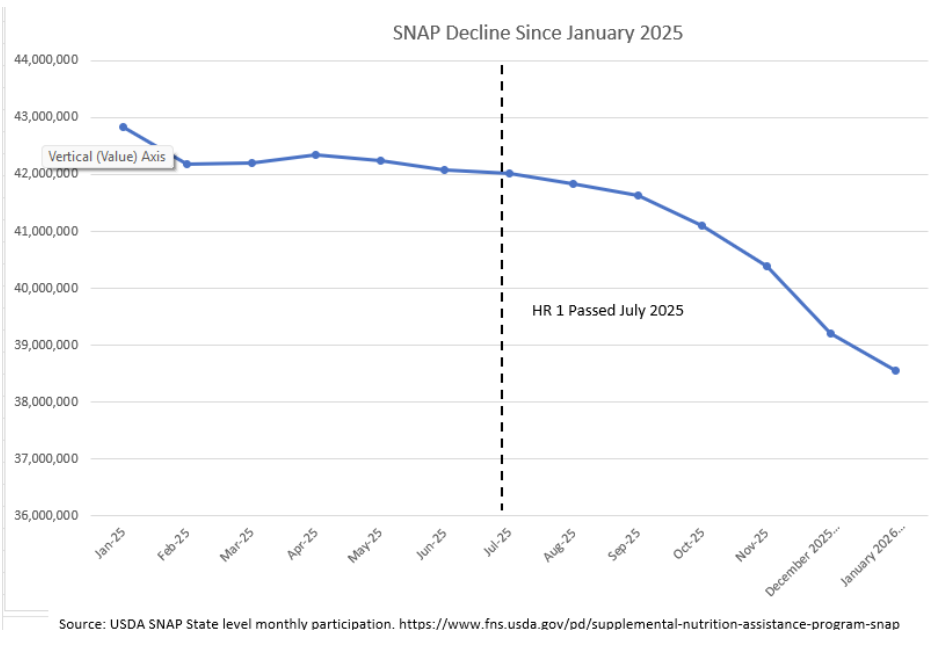
More than 3 million people have already lost SNAP participation since H.R. 1’s enactment. And the Congressional Budget Office projected millions more losses over time due to expanded time limits and eligibility restrictions.
What Will the Senate Do to Curb SNAP Cuts?
Now, as families face worsening affordability pressures, Congress is signaling that further cuts may be coming through another reconciliation package.
That should deeply concern every Senator.
Congress appears prepared to consider tens of billions more for immigration enforcement, expanded border operations, additional defense spending, and a White House ballroom — while continuing to weaken food assistance for working families.
If Congress can identify massive new funding for enforcement infrastructure and discretionary priorities, it cannot credibly argue that protecting food assistance is fiscally impossible.
This is not about scarcity; it is about priorities, and the Senate must decide what those priorities are.
Will Congress continue shifting costs onto states while state budgets weaken?
Will it punish workers in labor markets that are not creating enough stable jobs?
Will it deepen food insecurity while inflation continues straining family budgets?
Or, will it recognize that SNAP remains one of the most effective economic and anti-poverty tools the nation has?
The House failed to answer those questions responsibly. The Senate still can. A serious Farm Bill must reverse harmful SNAP cost shifts, reject punitive time limit expansions, and ensure SNAP can function as intended during economic stress.
Anything less would ignore the reality facing families, states, and communities across the country.
What Advocates Must Do Now
- Demand Senate action.
Call your Senators and make clear: The Senate must fix what the House failed to address. SNAP restoration must be a Farm Bill priority. - Hold House Members accountable.
Tell House Members who supported this bill that they failed families, workers, farmers, local businesses, and communities. - Mobilize governors, mayors, and budget leaders.
State and local officials must explain what these unprecedented SNAP cost shifts and punitive time limits will mean for balanced budgets, services, and communities. - Center lived expertise.
Bring SNAP participants, working parents, veterans, caregivers, older adults, and frontline workers directly to lawmakers. Lawmakers must see the real faces of SNAP — not harmful stereotypes. SNAP serves children, workers, seniors, veterans, and families doing everything possible in an economy that still does not pay enough. - Make the local economic case.
Document how SNAP dollars support grocery stores, farmers’ markets, food retailers, local jobs, and household spending — and explain that cutting SNAP shifts costs to cities, hospitals, schools, charities, and families. - Build broad local coalitions.
Engage small farmers, grocers, teachers, health care providers, food banks, veterans’ groups, faith leaders, and municipal officials to show how SNAP cuts ripple across communities.
Sources:
(1)Source: Summer Residential Cooling Outlook, Figure 1.
Source: Summer Residential Cooling Outlook, Figure 1.
Source: How High Are Gas Prices Where You Live?, NY Times
(2)Source U.S. Bureau of Labor Statistics
12-month percentage change, Consumer Price Index, selected categories
(3) Source: 2025 State Expenditure Report, Fiscal Years 2023-2025
Note: Graph includes all 50 states including territories and DC