


One Year After H.R. 1: Responding to SNAP Cuts
Millions of people have already lost access to critical food assistance as the harmful provisions in the budget reconciliation law (H.R. 1) unfold. FRAC is tracking the impact nationwide:
From Farmers to Families: How H.R. 1 Deepens America’s Hunger Crisis
The harmful Supplemental Nutrition Assistance Program (SNAP) provisions in the budget reconciliation law (H.R. 1) passed in July threaten to undermine decades of progress in reducing hunger in America, disrupt the food system, strip food away from millions of people, burden already strained state budgets, and threaten the economy.
ACT NOW: Urge Your Senators to Pass Legislation That Supports Families and Farmers, Restores SNAP
Congress must act to reverse these draconian changes. Use the FRAC Action Network to urge your Senators to restore and protect SNAP and ensure families have the food they need.
SNAP Cuts Hurt Us All
The far-reaching consequences of H.R. 1 will be felt in every corner of the country.
Although the fallout will be local, the design is federal. Despite strong opposition from governors, advocates, and public health leaders, this law shifts financial and administrative responsibility for SNAP to states and localities — while restricting eligibility, expanding time limits, and eliminating core nutrition education programs.
H.R. 1 prioritizes tax cuts for the wealthy over essential food assistance that stabilizes families, strengthens local economies, and prevents poverty.
The impacts of H.R. 1 will be felt throughout our communities.
Families
One analysis found H.R. 1 will reduce income for the poorest 20 percent of people in the U.S. by an average of 3.8 percent.
Food Retailers
Within six months, as participants lose SNAP, small grocers could see sales decline by as much as 6.7 percent.
Farmers

Farmers stand to lose $24 billion over the next decade as household food purchases decline.
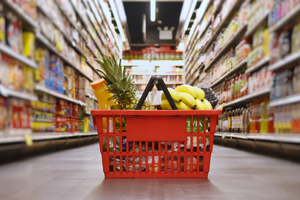
SNAP cuts “mean more strain on our budget, less resources to go towards public safety, to go towards schools, infrastructure, and other critical services.”
– Chris Hollins, city controller, Houston, Texas (The Cost of Cuts: The Economic Fallout of SNAP Reductions)
How H.R. 1 Will Force Families, States to Make Impossible Choices
Learn about the harmful provisions below.
— Increasing Administrative Costs on States —
Learn More
– State Cost-Sharing of Food Benefits –
Learn More
– Expanding Time Limits –
Learn More
– Restricting Noncitizen Eligibility –
Learn More
– Freezing Thrifty Food Plan Adjustments –
Learn More
– Limiting Access to Deductions –
Learn More
Ripple Effects: The Impact of SNAP Cuts on Child Nutrition
While H.R. 1 did not directly cut the child nutrition programs, the cuts to SNAP will have a major impact on school meals, the Special Supplemental Nutrition Program for Women, Infants, and Children (WIC), and Summer EBT.
Learn more in FRAC’s policy brief, Cuts to SNAP Threaten the Child Nutrition Programs.
- Impact on School MealsH.R. 1’s SNAP cuts put the Community Eligibility Provision (CEP) at risk. CEP is a federal program that allows schools and school districts in high-need areas to provide school meals at no charge to all their students. The SNAP cuts will make hunger worse and have ripple effects for the school meals programs, including threatening schools’ ability to implement CEP. As children lose access to SNAP, their automatic eligibility for free school meals is severed, and federal reimbursement for meals served in CEP schools decreases, jeopardizing the program’s financial viability and children’s access to free school meals.
- Impact on WICWhile the Special Supplemental Nutrition Program for Women, Infants, and Children (WIC) was not directly impacted by H.R. 1, the ripple effect of these cuts will reach far and wide. The National WIC Association estimates that based on the SNAP cuts alone, hundreds of thousands of infants and young children are at risk of losing their automatic eligibility for WIC. The impact would likely be even greater with Medicaid and TANF cuts taken into account.
- Impact on Summer EBTThe SNAP cuts enacted in H.R. 1 will have ripple effects on Summer EBT. As more children lose access to SNAP, hunger will increase, making the Summer EBT program even more vital to keeping children fed in the summer when they cannot access school meals.
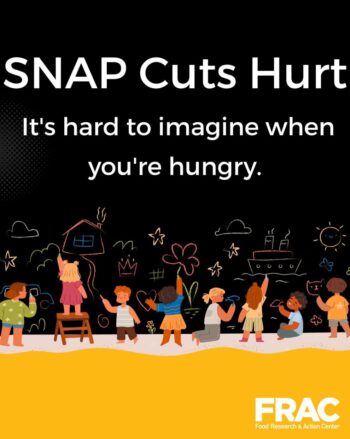

“My husband is a disabled combat veteran. He cannot work and I have to stay home and care for him and our small children. Cuts to SNAP would make things much harder to survive.”
– Amanda, Michigan (SNAP Matters: Quotes from Participants)
H.R. 1 Action Center
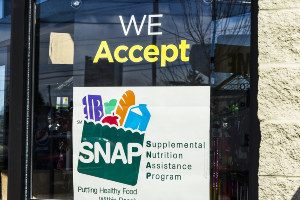
See Where SNAP Participation Has Dropped The Most
FRAC’s SNAP Participation Tracker compiles recent data nationally and by state to show how enrollment has changed since January 2025 and where declines are occurring most sharply.
Urge Congress to Reverse SNAP Cuts
Email your Members of Congress with a single click!
Take the FRAC SNAP Challenge
The average SNAP benefit is only $6 per person per day.
Join The FRAC Mailing List
Sign up for action alerts, news updates, and in-depth analysis.
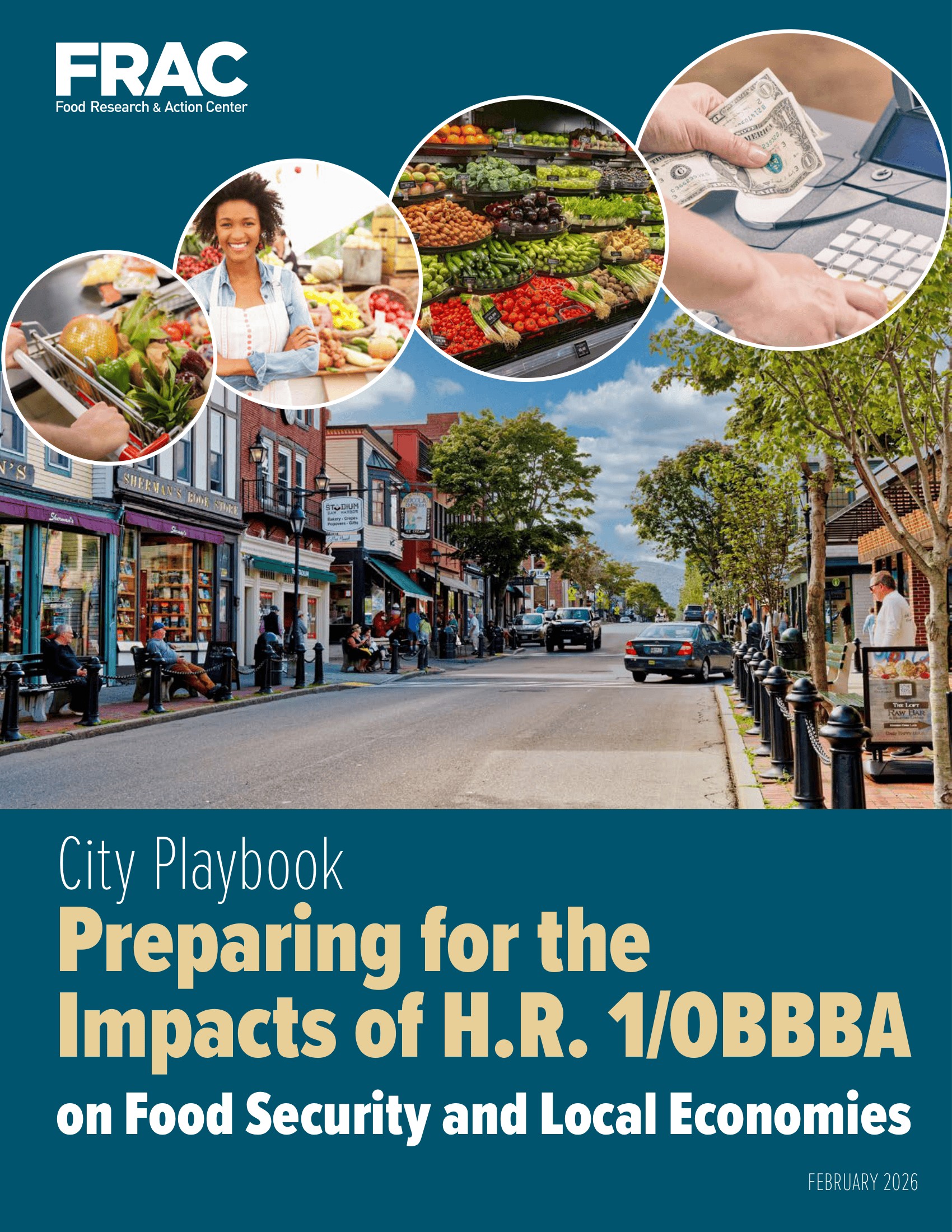
City Playbook: Preparing for the Impacts of H.R. 1 on Food Security and Local Economies
FRAC’s City Playbook is designed to help municipal leaders understand the scope of what’s coming, anticipate challenges, and prepare coordinated responses with state, federal, and community partners.
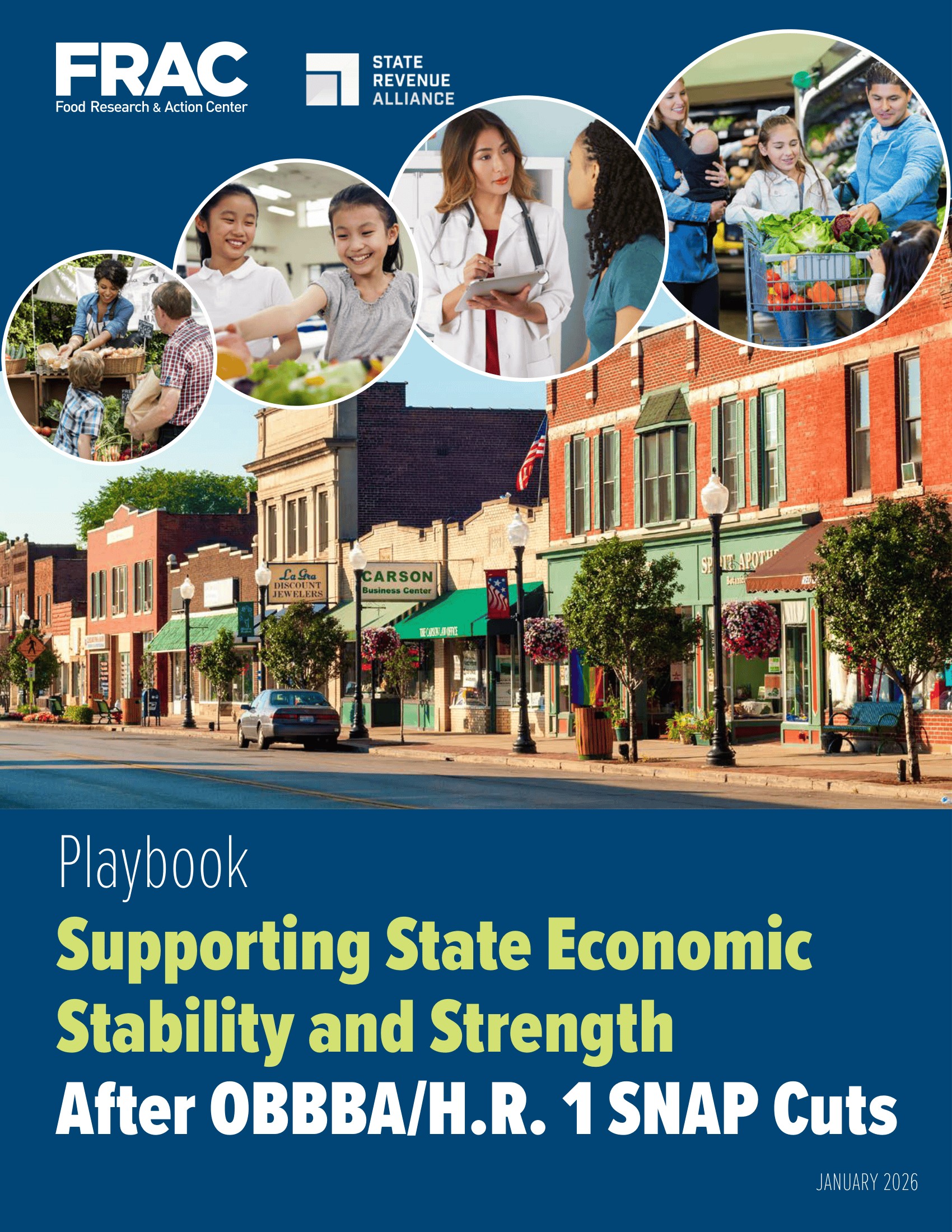
State Playbook: Supporting State Economic Stability and Strength After H.R. 1 SNAP Cuts
On paper, H.R. 1 is a federal law, but in practice, its burdens will fall squarely on the shoulders of children, families, and state and local governments. Learn how H.R. 1’s wide-ranging cuts undermine this proven federal nutrition program and how states can prepare.
FRAC H.R. 1 Webinars
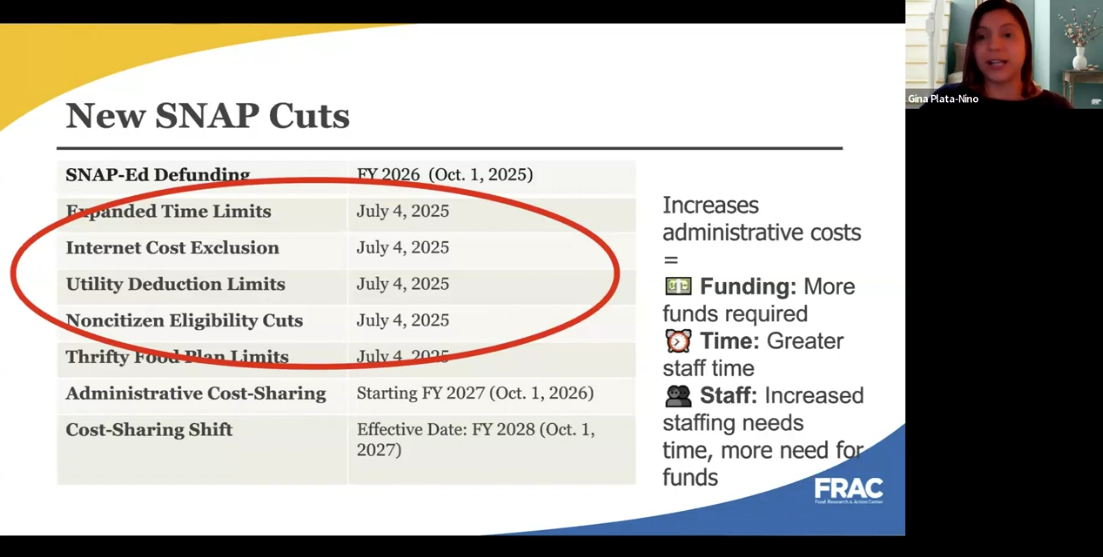
The Future of SNAP Benefits: Major Changes Ahead
Watch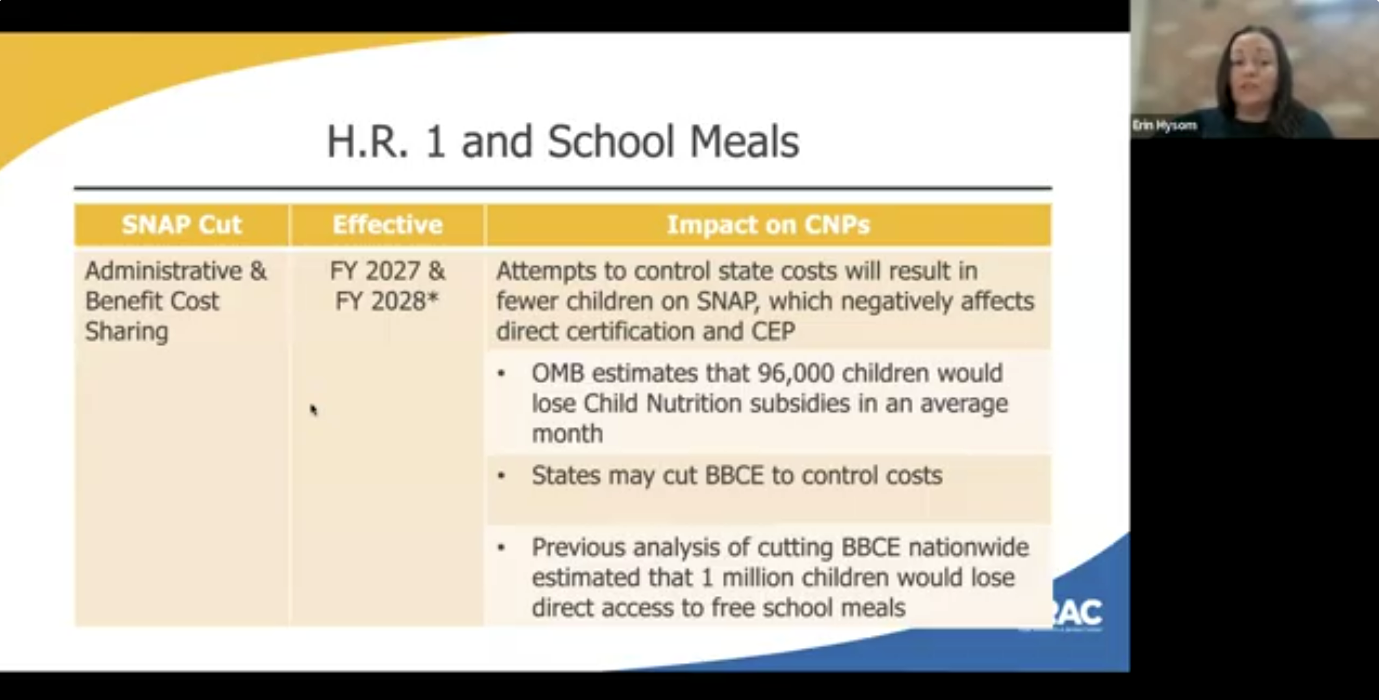
H.R. 1 SNAP Cuts Will Impact the Child Nutrition Programs
Watch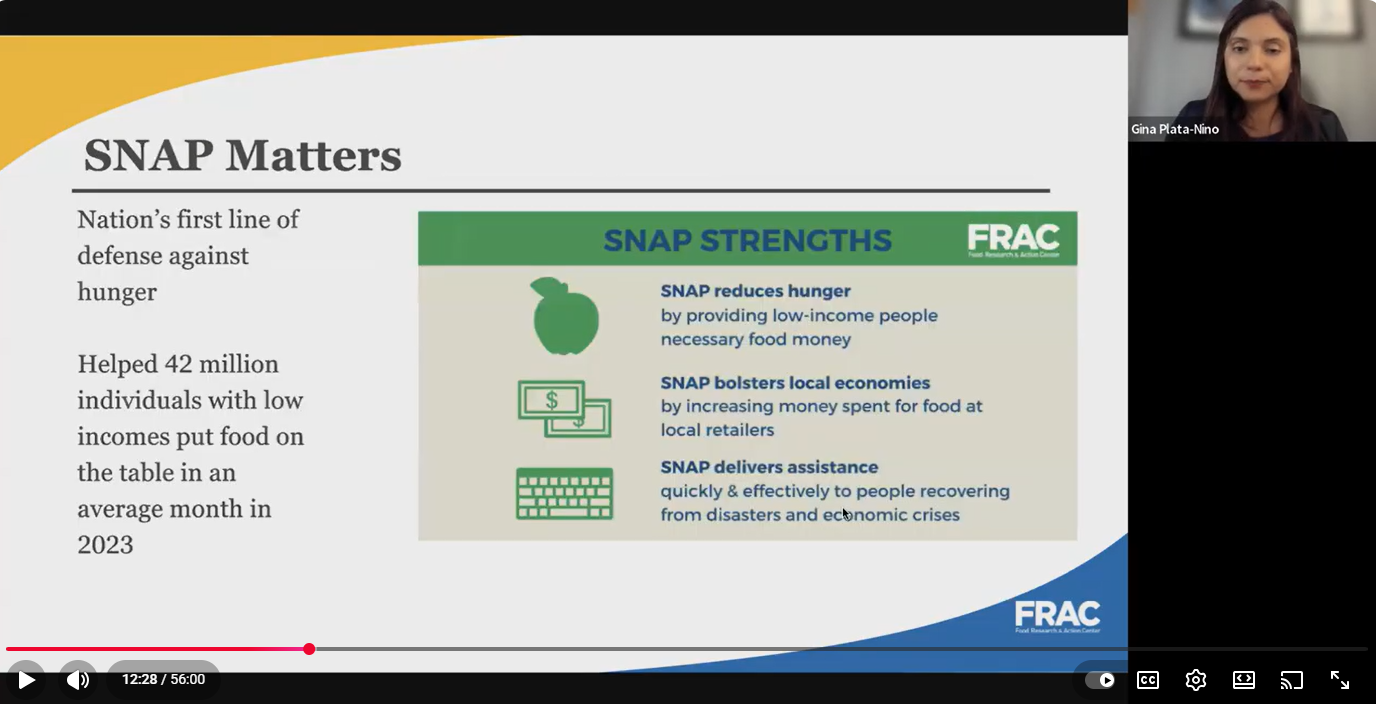
Protecting Older Adults: The Impact of Chronic Funding Shortfalls, Cuts, and Policy Changes on Senior Nutrition and Well-Being
Watch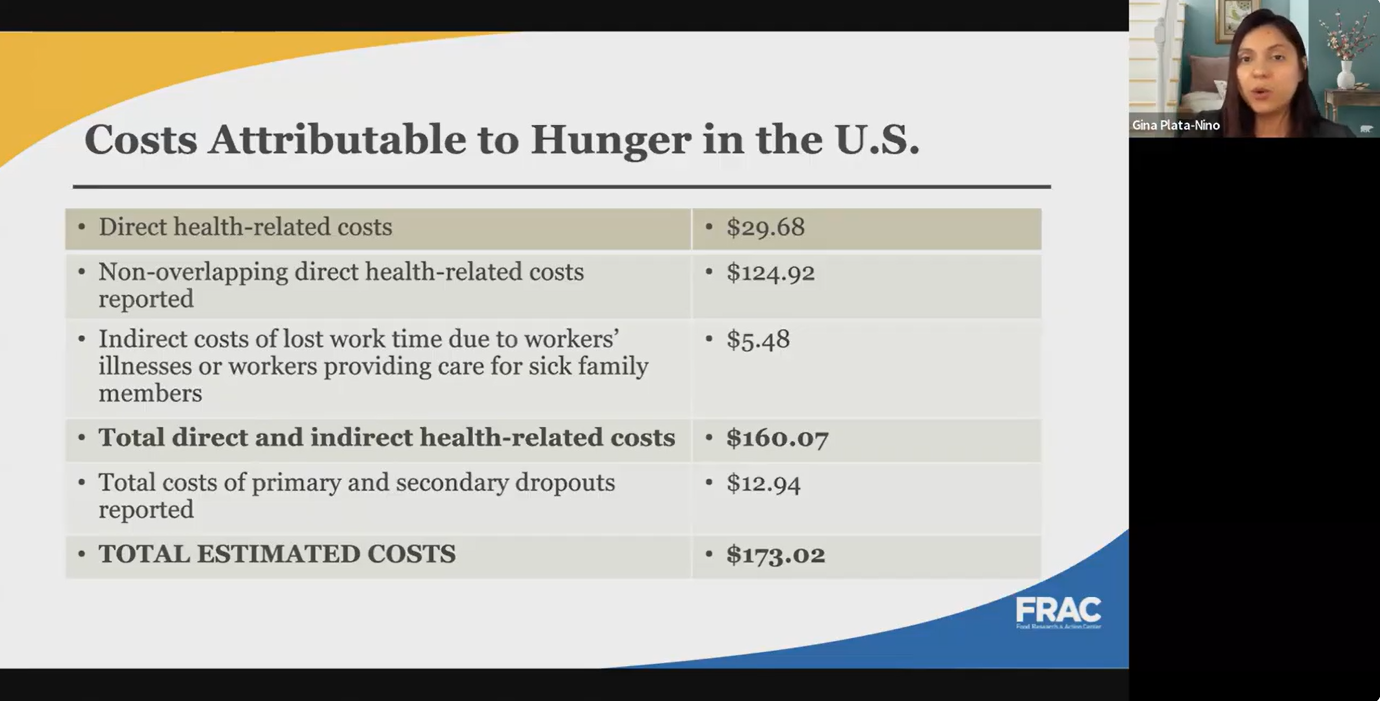
SNAP and Immigrant Communities: Understanding Eligibility Changes and Protecting Access After H.R. 1
Watch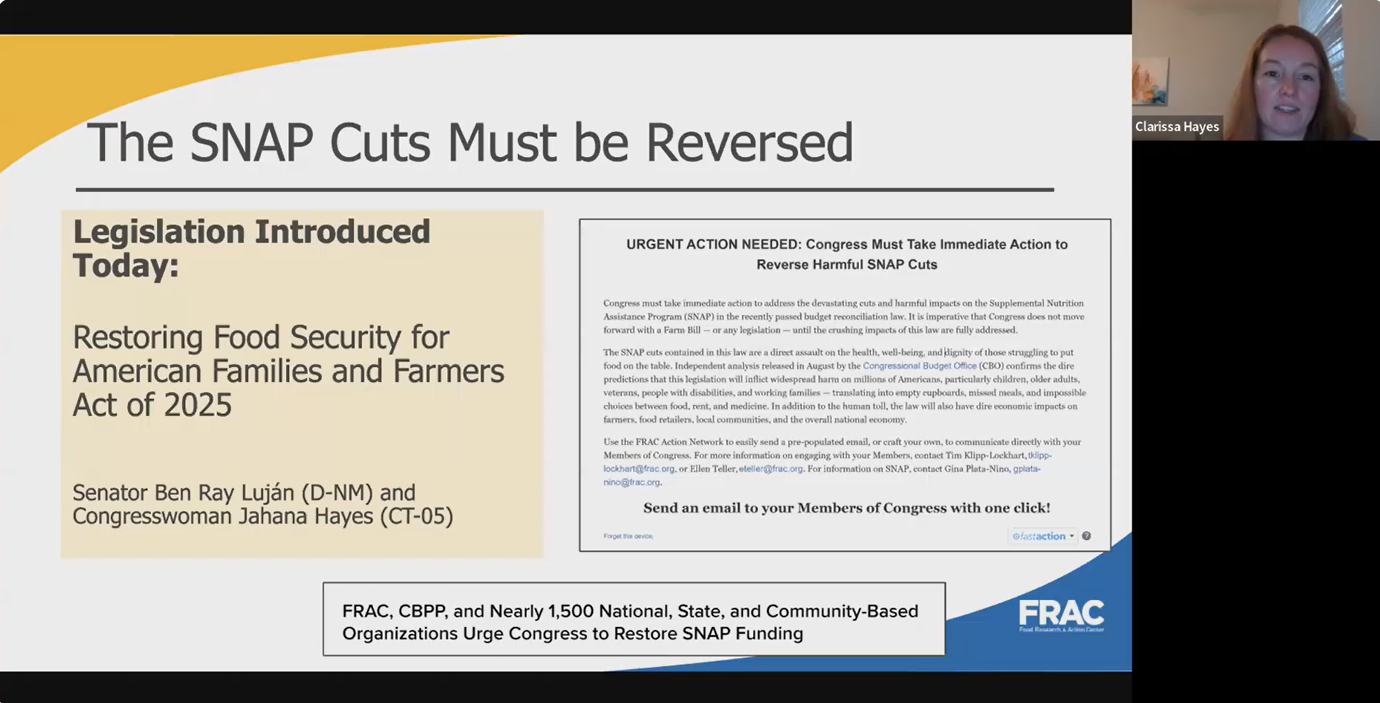
H.R. 1: Protecting Progress in the Child Nutrition Programs
Watch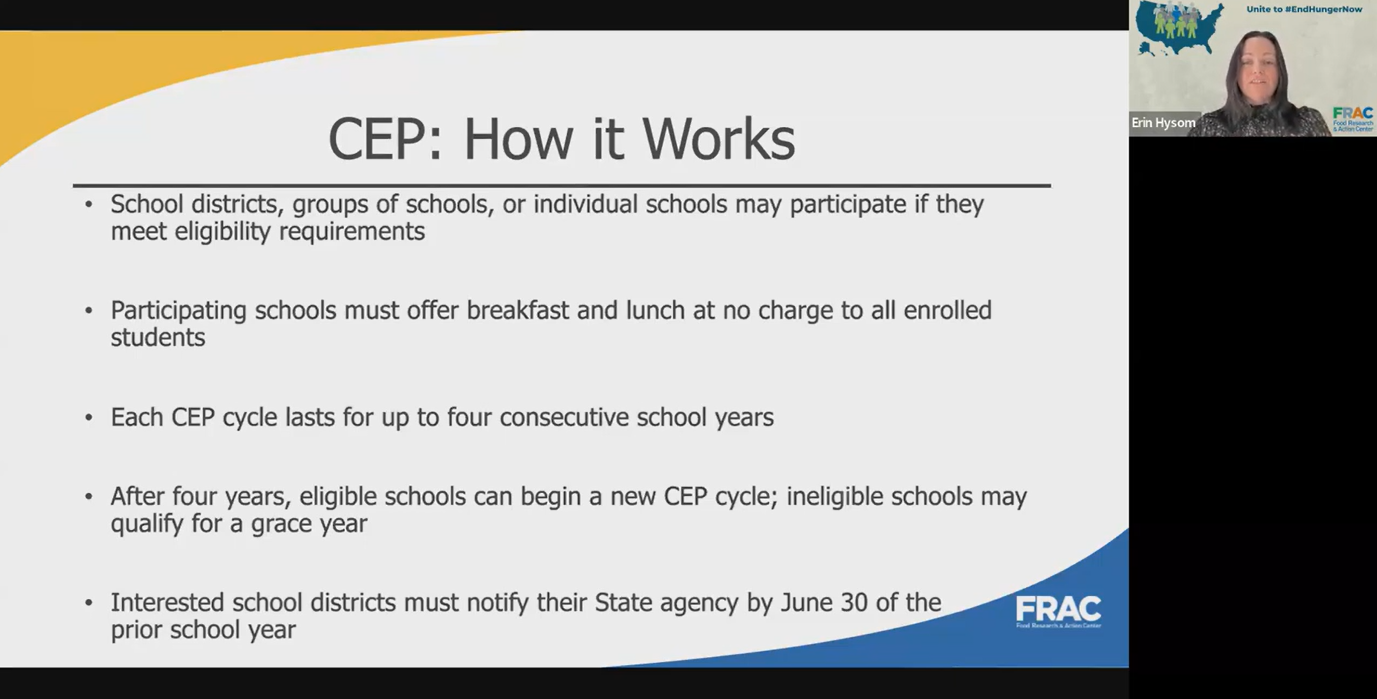
SNAP Cuts, School Meal Consequences: Protecting Children's Access to Nutritious School Meals
Watch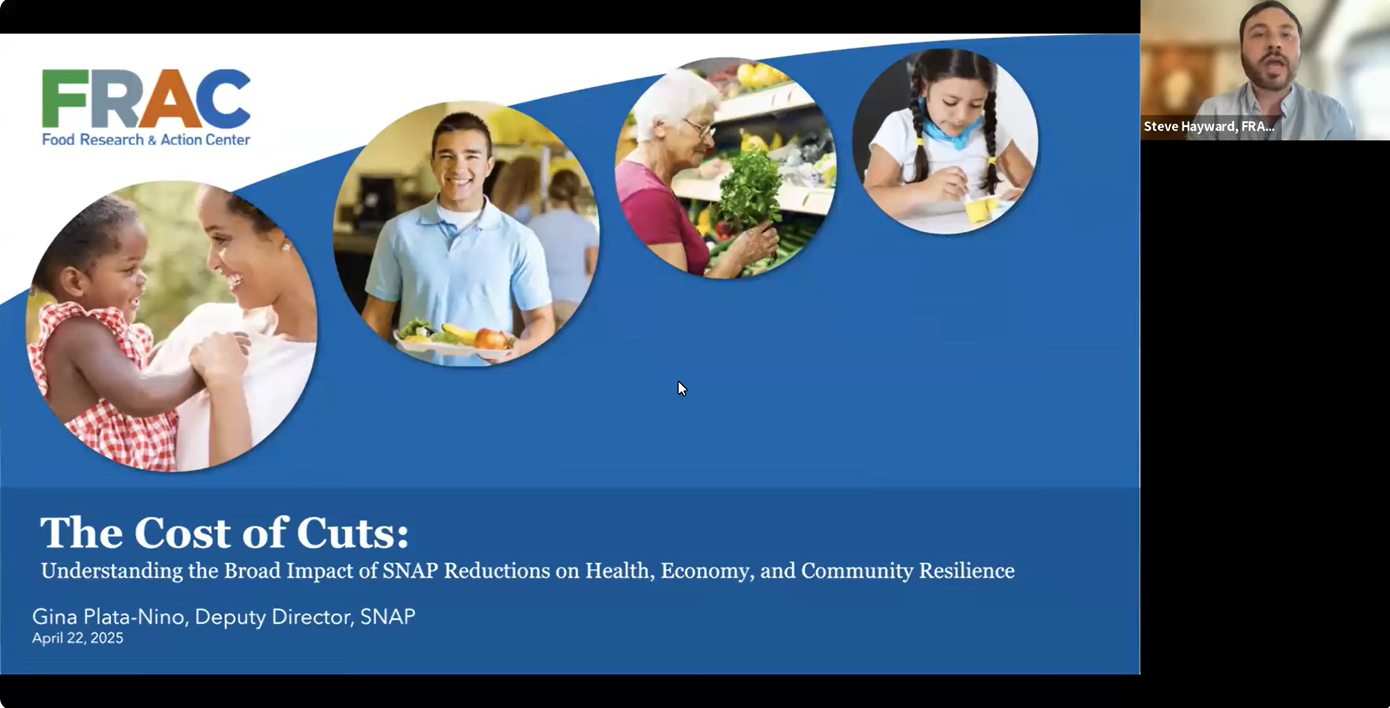
The Cost of Cuts: Understanding the Broad Impact of SNAP Reductions on Health, Economy, and Community
Watch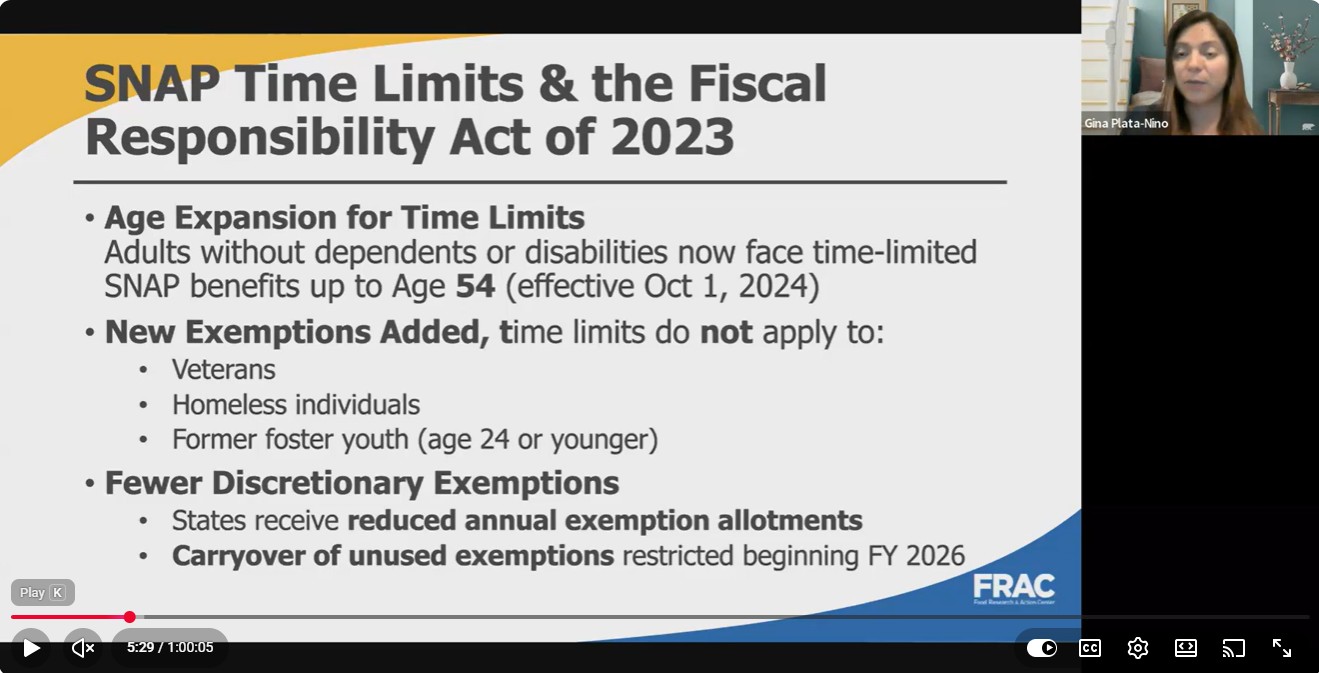
Expanding SNAP Time Limits: How Proposed Cuts Harm Vulnerable Communities
Watch
The Cost of Cuts: The Economic Fallout of SNAP Reductions
Watch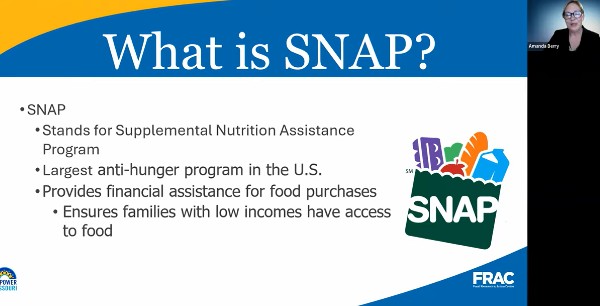
SNAP 101: What New Advocates Should Know
Watch
What the Proposed Billion-Dollar SNAP Cuts Will Mean for Farm Communities
Watch
The Impact of Proposed SNAP Cuts on Students and Schools
Watch