


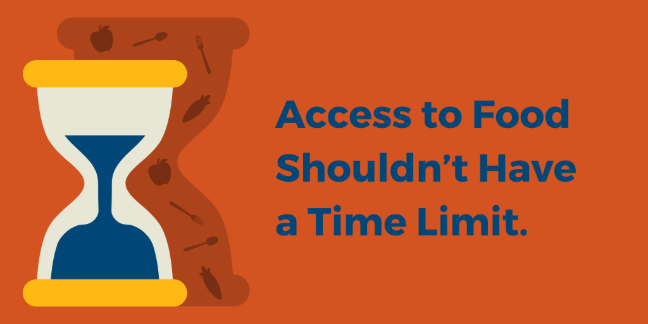
H.R. 1 expands harsh SNAP time limits to older adults up to age 65, while eliminating exemptions for veterans, adults experiencing homelessness, and former foster youth.
Time limits restrict certain adults to SNAP benefits for three months in a three-year period unless they meet strict work documentation requirements or qualify for an exemption.
H.R. 1 has expanded the time limit from 18 – 54 to 18 – 65, and for the first time, includes parents and caregivers of children.
H.R. 1 goes further and cuts deeper, restricting access to food assistance for:
-
adults up to age 65
-
parents, grandparents, or caregivers of children ages 14 or older
-
veterans
-
adults experiencing homelessness, including homeless families with children 14 or older
-
former foster youth
Time Limits Penalize Rather Than Empower
-
contribute to rising rates of deep poverty among adults without children
-
disproportionately harm rural areas, where poverty rates are already high, especially among part-time workers
-
do NOT increase employment, but often lead to SNAP benefit loss among eligible individuals due to complex paperwork, inflexible rules, and administrative burdens
Guidance

Map out local exemptions

Coordinate workforce agencies

Screen individuals for exemptions
H.R. 1: Changes to SNAP Time Limits
Read MoreWe Want to Hear From Your Stories - How Are SNAP Time Limits Impacting You?
Share your storyWe Want to Hear From Your Stories - How Are SNAP Time Limits Impacting You?
Share your storyQ&A: How Does the New SNAP Time Limits Policy Affect You? What States and Families Need to Know
Read moreQ&A: Understanding SNAP Time Limits and the Burden of Expanded Work-for-Food Requirements
Read moreSNAP Access: Model Policies and Best Practices for Supporting Transition-Age Youth With Experience in Foster Care and/or Homelessness
Read MoreAdvocate's Checklist: Helping Transition-Age Youth Keep Their SNAP Benefits
Read more