


Under H.R. 1, the Thrifty Food Plan (TFP) must now remain cost-neutral. This will make it harder for SNAP participants to afford the food they need.
The Thrifty Food Plan (TFP) is the lowest-cost of USDA’s four food plans, and serves as the basis for setting SNAP benefit levels. The TFP determines the cost of a nutritious meal at minimal expense.

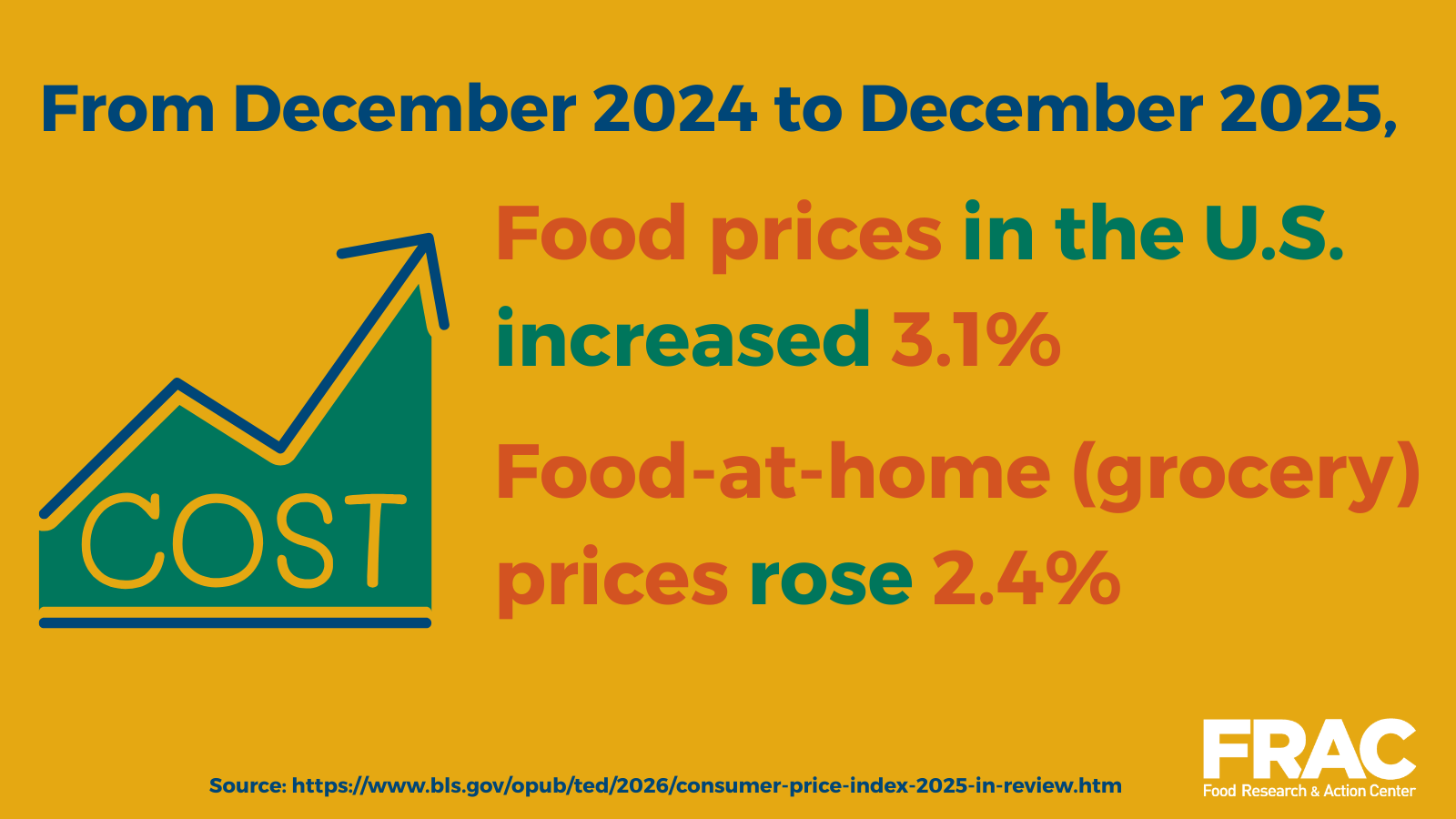
The enactment of H.R. 1 means future updates to the TFP cannot result in increased benefit levels, even if food prices rise significantly.
As Food Prices Climb, H.R. 1 Freezes Thrifty
These limitations will make it harder for SNAP to keep pace with inflation and real food costs, gradually eroding families’ purchasing power and increasing food insecurity for millions of participants.

In 2021, USDA completed the first comprehensive update to the TFP in nearly 50 years, aligning it with current nutrition science, food prices, and the realities of modern food preparation.
As a result, average SNAP benefits increased by approximately $1.40 per person per day. This long-overdue adjustment lifted 2.9 million people out of poverty across the U.S. Yet benefits remain inadequate: the average SNAP benefit still only comes to about $6 a day for individuals.
Guidance

Simplify reporting and verification processes

Support households in reporting expenses and deductions

Advocate for legislative reform
Fact Sheets & Resources
Impact of H.R. 1 on Thrifty Food Plan
Read more