

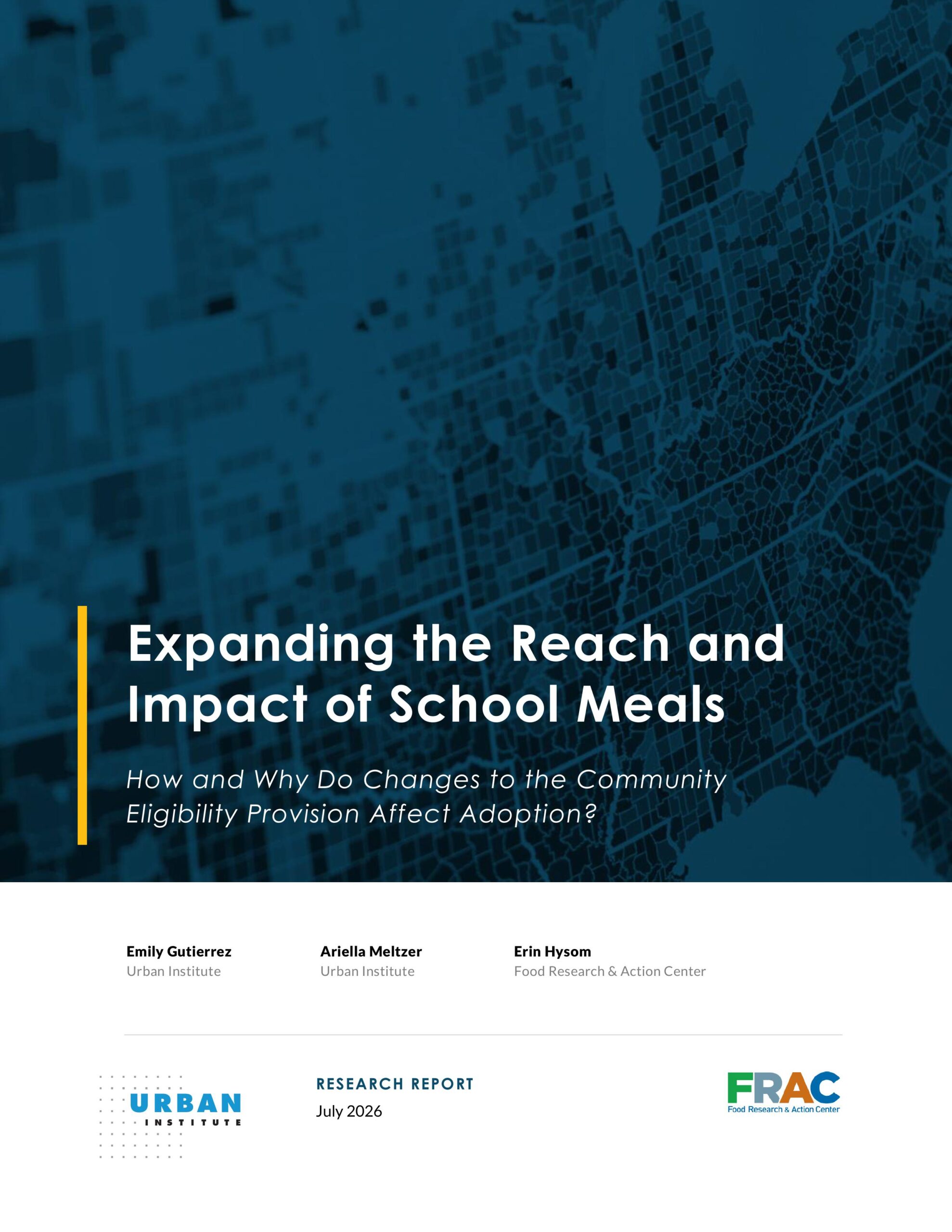
Explore how and why changes to the Community Eligibility Provision (CEP) affect adoption in Expanding the Reach and Impact of School Meals, a co-production by FRAC and the Urban Institute.
CEP Fuels Student Health & Learning

What Is CEP?
The Community Eligibility Provision (CEP) allows eligible schools and school districts to provide breakfast and lunch at no charge to all students. Since expanding nationwide in 2014, CEP has helped millions of students access healthy school meals.
During the 2025–2026 school year, a record 55,362 schools offered free breakfast and lunch to all their students through CEP.

Key Findings

- CEP participation is concentrated in higher-poverty, urban schools. CEP schools tend to have higher rates of students directly certified for free meals and are more likely to serve larger shares of Black and Hispanic students.
- Lowering the participation threshold increased eligibility, but adoption has been gradual. While thousands of additional schools became eligible for CEP when the ISP threshold was reduced from 40 percent to 25 percent, only a small share joined during the first year, suggesting that eligibility alone does not determine participation.
- Medicaid direct certification supports schools’ adoption of CEP. States using Medicaid and household income data to directly certify students for free meals saw increases in both CEP eligibility and participation.
- Once schools adopt CEP, they usually stay in the program. Participation is generally stable over time, particularly among schools with higher reimbursement rates.
- CEP can strengthen school meal program finances. Schools that adopted CEP generally received more federal funding, which more than offset declines in local meal revenue.
- CEP’s financial impact varies by community. While districts across urban, suburban, town, and rural areas saw shifts toward greater federal funding, the size of the financial impact differed by location.

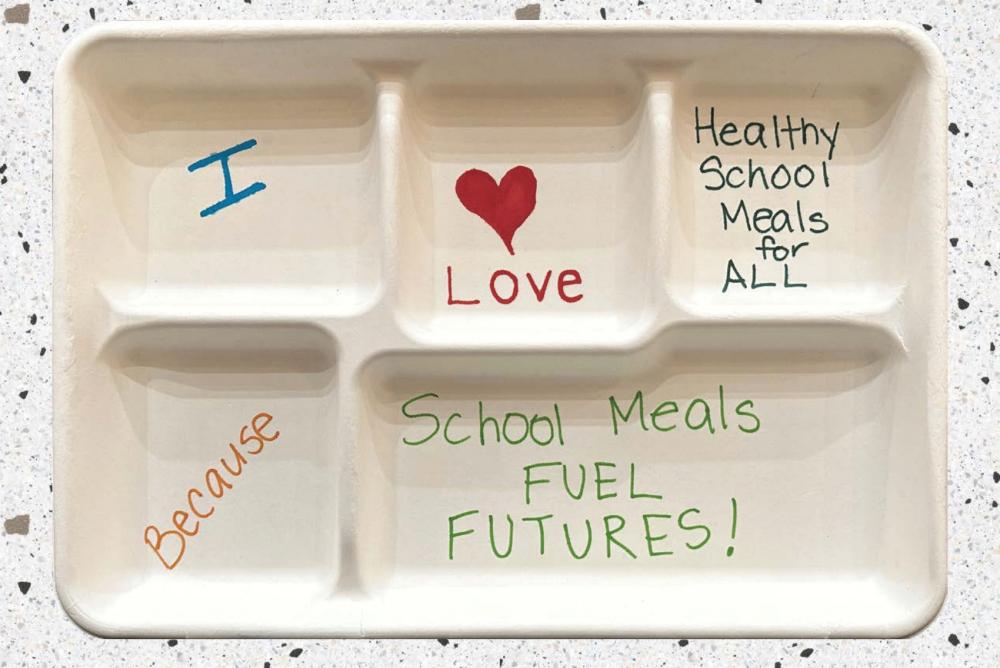
Act Today to Expand Healthy School Meals for All
Urge your Members of Congress to cosponsor the Universal School Meals Program Act, which would create permanent nationwide Healthy School Meals for All, end lunch shaming, and more.
Check to see if your Senator is on the bill here and if your Representative is on the bill here.