


Published April 10, 2026
On Friday, April 3, President Trump released his proposed budget for fiscal year 2027. Despite the administration professing a commitment to making America healthy, this budget proposal would cut critical nutrition service for moms, babies, and children, dramatically slashing the benefit that participants in the Special Supplemental Nutrition Program for Women, Infants, and Children (WIC) receive to purchase fruits and vegetables — what is known as the cash value benefit (CVB).
WIC is a critical program to support the health and well-being of pregnant and postpartum individuals, infants, and young children. The program provides nutritious foods, nutrition education, breastfeeding support, and health care referrals for nutritionally at-risk infants, children up to 5 years old, and pregnant and postpartum individuals from households with low incomes.
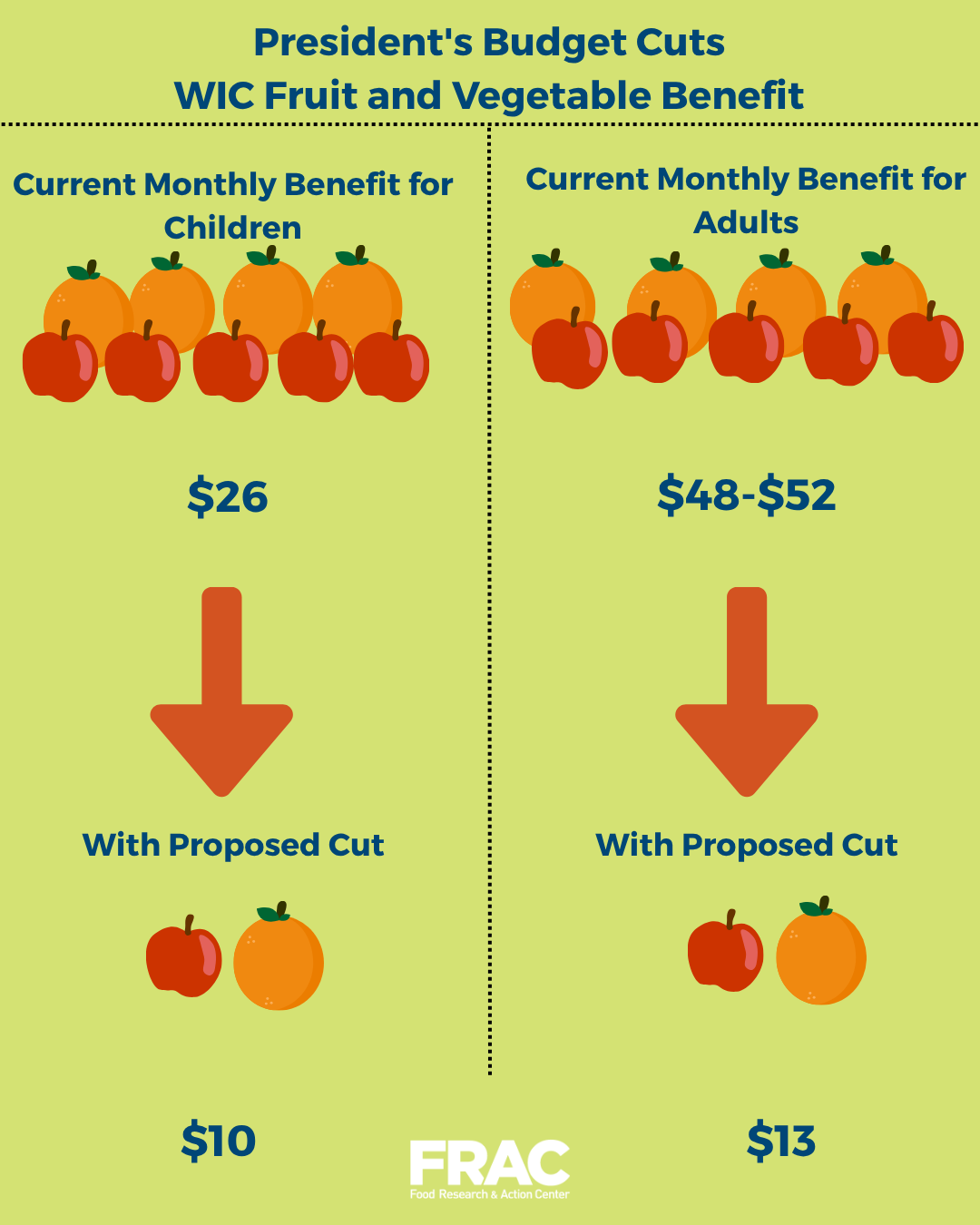
Under this proposed budget, children would see their fruit and vegetable benefit drop from the current level of $26 to approximately $10 each month, and adult participants would see their benefits drop from $48-$52 to approximately $13 each month. This reduction would mean fewer fruits and vegetables on the table during pregnancy, postpartum, and early childhood.
What Is the Cash Value Benefit?
In 2007, Congress introduced the fruit and vegetable CVB to increase the nutritional standard of the WIC food packages. In 2024, the U.S. Department of Agriculture issued a final rule updating the components of the WIC food packages, including the CVB. This long-overdue improvement of the CVB was based on recommendations from the 2017 National Academies of Sciences, Engineering, and Medicine (NASEM) report on WIC and focused on better meeting the nutritional needs of children and pregnant and postpartum individuals. The amount set was based on expert recommendations to provide 50 percent of the daily recommended intake of fruits and vegetables and will be adjusted annually based on inflation.
WIC participants can use their CVB to purchase fresh, frozen, canned, or dried fruits and vegetables. The CVB is different from other components of the food package as it has a specific cash value, allowing participants to choose the fruits and vegetables that meet their needs and preferences.
What Are the Benefits of the CVB?
By offering the ability to purchase more fruits and vegetables, the CVB has several positive impacts, including:
- increases access to fruits and vegetables for WIC participants to provide nutrients necessary for growth and development;
- supports local businesses as the additional CVB is spent in local grocery stores and at farmers’ markets;
- heightens demand for fruits and vegetables, which supports producers and farmers; and
- enhances the overall value of WIC by incentivizing more families to participate in the program.
CVB is a vital part of the WIC program and its role in improving maternal and child health and reducing hunger.
Congress must continue its longstanding bipartisan commitment to fully fund WIC at a level meant to guarantee that the program meets the needs of eligible participants at the current benefit levels. Congress must also include in appropriations a commitment to ensure WIC can continue to provide services in a flexible way and supporting legislation to modernize the program and keep remote service options.
Use FRAC’s FAN to call on your Members of Congress to fully fund WIC, without cuts to the CVB or other essential benefits. With full benefits and flexible services, WIC can continue to serve families to ensure a healthy start for infants and children.