



Published May 28, 2026
FRAC’s recently released Large School District report reveals that despite growing pressures, school nutrition professionals around the country continue to employ best practices to increase children’s access to nutritious school meals. In February 2026, FRAC surveyed 96 large school districts across 37 states and the District of Columbia on school meals operations and participation. Findings show that even in the face of challenges, including high food and labor costs, school nutrition departments continue to do what they do best: innovate, adapt, and put children’s health and well-being first.
The Key to Success: Healthy School Meals for All
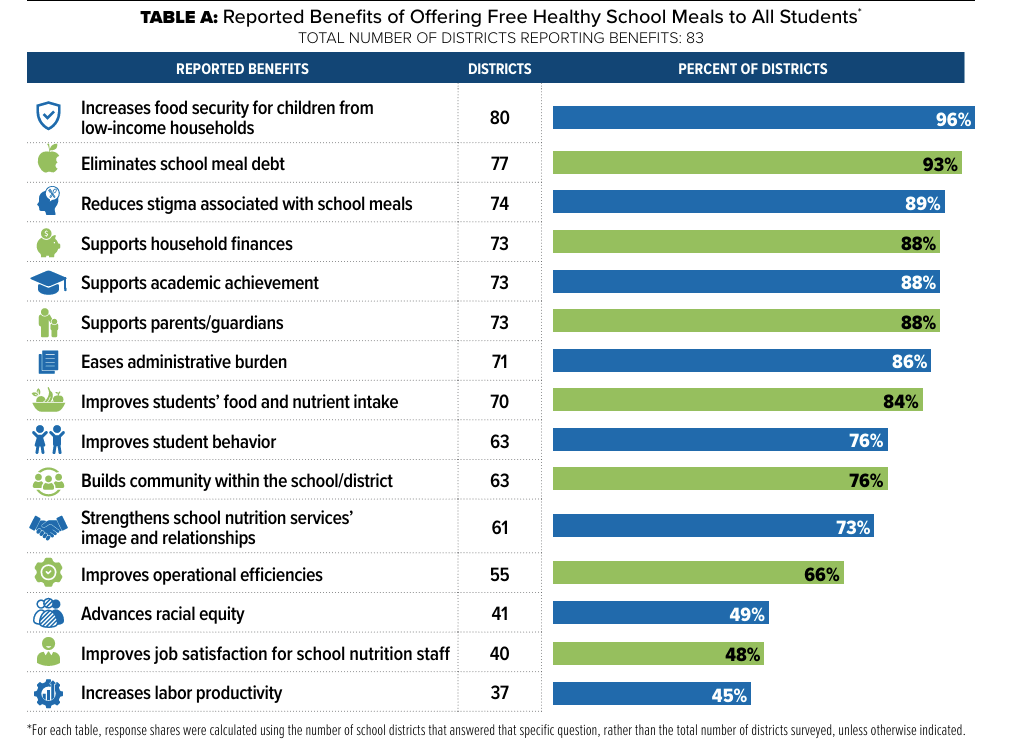
Of the 96 school districts surveyed, 74 of them (77 percent) offered breakfast and lunch at no charge to all students in at least some of their schools. Offering all children school meals at no charge, whether through states’ Healthy School Meals for All policies or the Community Eligibility Provision (CEP), remains the gold standard for school meals access. The school districts surveyed reported numerous benefits of offering all children free school meals.
School districts are also working to close the breakfast gap, that is, the difference between lunch and breakfast participation. In October 2025, a total of 47.8 million lunches were served in the districts surveyed, but only 26.8 million breakfasts were served. School districts report that breakfast after the bell is key to increasing children’s access to this vital morning meal. Districts also say models such as breakfast in the classroom, “grab and go,” and second chance boost School Breakfast Program participation, improve food security for children from low-income households, support healthier diets, and ease financial pressures facing families.
School districts are especially focused on increasing breakfast participation among older youth, when participation typically drops. The top two strategies school districts are using to increase middle and high schoolers’ participation include implementing “grab and go” breakfast and developing menu items specifically for older children. The District of Columbia Public Schools (DCPS), for example, developed new breakfast recipes and offered incentives:
“DCPS self-operated sites implemented incentives for [high school] breakfast participation by adding breakfast bars, such as yogurt and breakfast bowls, as well as by entering students into a raffle who ate breakfast at school during the month of October.”
Challenges Facing School Nutrition Operators
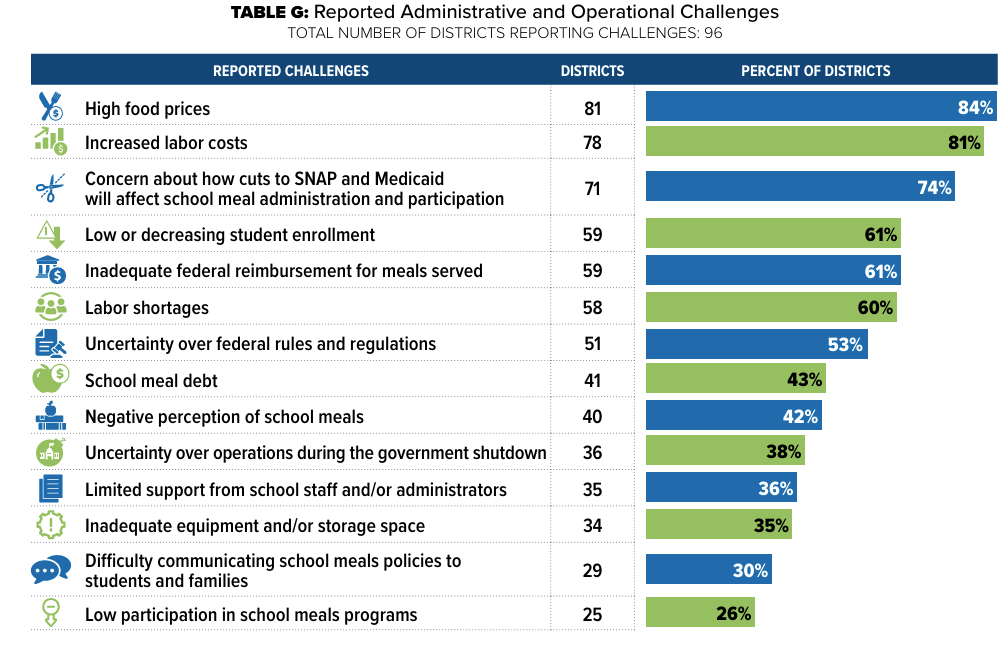
Despite innovation and dedication, schools are still facing significant challenges that limit students’ access to healthy meals, including high food and labor costs, rising school meal debt (in districts that do not offer meals to all students at no charge), aging infrastructure, and how cuts to the Supplemental Nutrition Assistance Program (SNAP) and Medicaid will affect school meals administration and participation. All of the school districts surveyed indicated numerous challenges that limit their ability to serve more children.
Call on Congress to Invest in School Meals
School meals remain one of the strongest tools for supporting student health and learning. Nutritious school meals improve classroom behavior, support students’ mental health, improve children’s diets, and enhance students’ ability to learn. They are also a critical line of defense against childhood hunger.
Offering all children school meals at no charge also supports schools’ nutrition operations. By reducing administrative burdens, increasing participation in the programs, and creating economies of scale, CEP and Healthy School Meals for All policies support schools’ ability to serve nutritious and delicious school meals to more students.
Congress must act now by passing the Universal School Meals Program Act (H.R. 8798/S. 4518) or the Feed Our Kids Act (H.R. 8728), which would create a permanent, national Healthy School Meals for All program. Investing in CEP and supporting schools’ ability to purchase healthy food by increasing the federal reimbursement for school meals is also necessary to ensure students have access to the nutrition they need for health and academic success. Finally, Congress must repeal the devastating cuts to SNAP passed in the budget reconciliation law, H.R.1, to ensure students’ access to free school meals is not jeopardized, including schools’ ability to implement CEP.
By repealing SNAP cuts and investing in school meals programs, Congress can ensure that no child goes hungry at home or at school.