


Published May 1, 2026
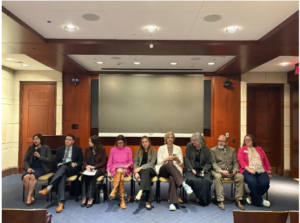
During a FRAC Capitol Hill briefing on April 29, anti-hunger advocates from across the country raised urgent concerns about the real-world consequences of the $187 billion in cuts to the Supplemental Nutrition Assistance Program (SNAP) in the budget reconciliation law, H.R. 1, that was enacted in July 2025. They shared how the cuts are already increasing hunger, pushing families deeper into poverty, and placing unsustainable administrative and financial burdens on states and the charitable sector.
Their message was clear: SNAP matters and the cuts must be reversed.
Advocates emphasized that charitable food systems are already stretched to their limits and cannot replace SNAP for the millions who are losing benefits. SNAP provides nine meals for every one provided by emergency food.
Several speakers highlighted that, in addition to reduced funding, SNAP cuts also increase complexity, confusion, and fear that discourage participation.
Krista Hesdorfer, director of public affairs for Hunger Solutions New York, reported that hundreds of thousands of the state’s residents have lost access to SNAP in less than a year, despite continued need driven by high grocery prices and an unsteady job market. Families have not suddenly reached food security. The confusing rules, strict requirements, and administrative barriers are what’s causing them to opt out of applying or lose access to SNAP.
Hesdorfer shared an account of individuals navigating medical crises, unstable work hours, or caregiving responsibilities while desperately trying to maintain SNAP eligibility — underscoring how unforgiving the new rules can be for people already in crisis. She said, “Just yesterday, I heard from a partner who had someone volunteering at the food distribution site to try to get their hours to maintain their SNAP benefits. The person unfortunately had a medical emergency while they were at the food distribution site, and as they were being taken to the hospital in the back of an ambulance, they kept asking, ‘how will I get my hours so that I can keep my benefits?’”
Impact on School Meals
Cuts to SNAP also have serious consequences for children’s access to school meals. Participation in SNAP allows children to be automatically enrolled in free school meals through a process known as direct certification. When families lose SNAP, children often lose that automatic access as well, which increases paperwork, stigma, and the risk of hunger at school. In states like Kansas, Haley Kottler, senior campaign director of Kansas Appleseed, shared how tens of thousands of residents have lost SNAP since H.R. 1 passed, including thousands of children. The result is fewer students connected to free school meals and fewer schools in high poverty communities being able to offer school breakfast and lunch to all their students at no charge through the Community Eligibility Provision.
Food for the Hungry Shouldn’t Have a Time Limit
Advocates from rural and seasonal economies described how expanded time limits, which refer to SNAP work reporting requirements, fail to reflect the realities of modern work.
In states like Alaska and Minnesota, older adults, caregivers, seasonal workers, gig workers, and people in physically demanding industries are being swept into requirements designed for stable, year-round employment. These rules leave many people cycling on and off SNAP, or losing benefits altogether, despite ongoing need.
For those already living on the edge, advocates stressed that SNAP often represents the last safeguard against hunger — and losing it can be catastrophic.
States Are Being Asked to Do More With Less
Advocates raised serious concerns about cost-shifts to states under H.R. 1, warning that their states are being asked to absorb increased administrative and benefit costs without the resources to do so. without the resources to do so.
Without relief, advocates cautioned that both families and state agencies will pay the price.
The advocates closed the briefing by reminding lawmakers that hunger is a policy choice.
SNAP remains one of the most powerful tools to prevent food insecurity. Advocates urged Congress to restore SNAP, so that the millions of struggling families who participate are able to keep food on the table.
The briefing followed the annual FRAC National Anti-Hunger Policy Conference, which brought nearly 1,000 advocates to Washington, D.C. FRAC President Crystal FitzSimons has urged Members of Congress to oppose any Farm Bill that fails to reverse SNAP cuts, warning that millions have already lost benefits and poverty has increased as a result.
Learn more about the impacts of H.R. 1 and efforts to mitigate SNAP cuts through FRAC’s SNAP Cuts Mitigation Hub.