


Many large school districts across the country report significant challenges keeping children fed and school nutrition operations running effectively due to rising food and labor costs, inadequate federal reimbursement, and new federal policies, according to FRAC’s latest report, Large School District Report: A Snapshot of Participation and Operations in October 2025.
FRAC surveyed 96 districts across 37 states and the District of Columbia on their school meals participation and operations in October 2025. For this report, a large school district was defined as having an enrollment greater than 7,500 students.
Key Findings
-
- The 96 school districts highlighted in this report included a total of 6,751 schools representing 3,867,621.
- In October 2025, a total of 26.8 million school breakfast were served in the surveyed districts.
- In October 2025, a total of 47.8 million lunches were served in the surveyed districts.
- 6,169 schools (91 percent) across 78 school districts (81 percent) offered breakfast and lunch to all or some of their students at no charge through the Community Eligibility Provision (CEP), Provision 2, or states’ Healthy School Meals for All policies.
Large School District Report 2026
Read the report
Large School District Report 2025
Read last year's report
Press Release
Read the news release!
Challenges Persist for Large School District Nutrition Departments
The surveyed large school districts continue to report challenges, both on an administrative and operational level:
-
- 81 school districts (84 percent) reported high food costs
- 78 school districts (81 percent) reported increased labor costs
- 71 school districts (74 percent) reported concerns regarding how cuts to SNAP and Medicaid will affect school meal administration and participation
Additionally, school districts reported school start times, menu fatigue, and limited support from school staff and administrators as barriers to breakfast specifically.
School Meals Fuel Children’s Health and Learning
-
- Nutritious, accessible school meals play a powerful role, improving children’s food security, boosting student well‑being, encouraging positive classroom behavior, and strengthening academic success.
- 80 school districts reported that offering free school meals to all students increases food security for children from low-income households
- 74 school districts reported that offering free schools meals to all students reduces the stigma associated with school meals
- 73 school districts reported that offering free school meals to all students supports academic achievement

Healthy School Meals for All Benefits Students, Families & Schools
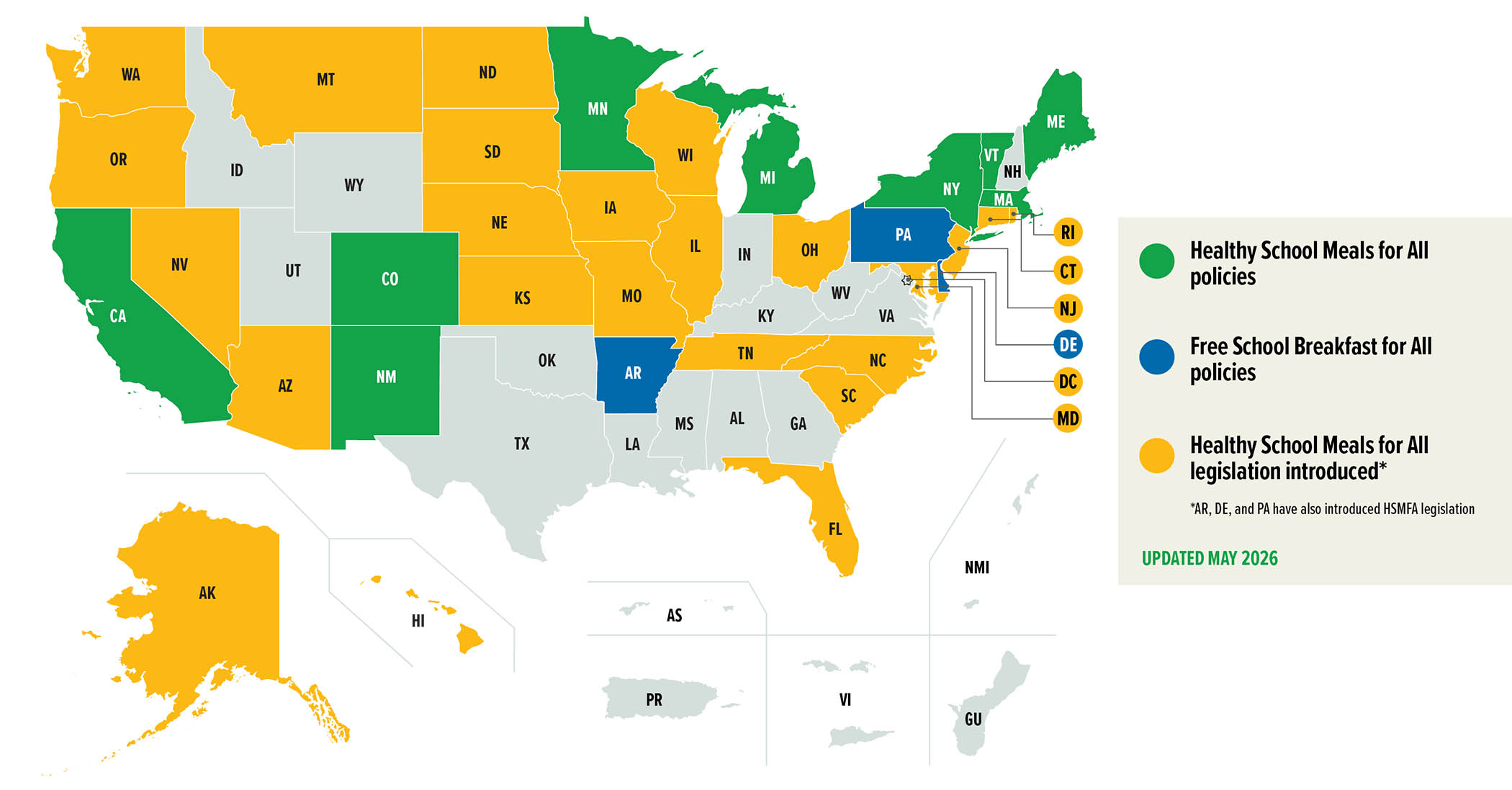
Offering school meals to all students at no charge continues to gain momentum around the country. To date, nine states have passed permanent Healthy School Meals for All policies:
School districts reported numerous benefits to offering all students school meals at no charge:
-
- 77 school districts reported that offering free school meals to all students eliminates unpaid meal debt
- 73 school districts reported that offering free school meals to all students supports household finances
- 73 school districts reported that offering free school meals to all students supports parents and guardians
The Community Eligibility Provision has been a gamechanger for school meal access, allowing high poverty schools to offer all students school meals at no cost. School districts participating in Community Eligibility highlighted several key operational benefits to implementing the provision:
-
- 69 school districts reported that the Community Eligibility Provision increases participation in school meals programs
- 68 school districts reported that the Community Eligibility Provision eases administrative burdens for school nutrition departments
- 62 school districts reported that the Community Eligibility Provision supports school nutrition finances.
Read FRAC’s new report for a full list of the reported benefits.
SNAP Cuts Threaten to Undermine School Meal Participation
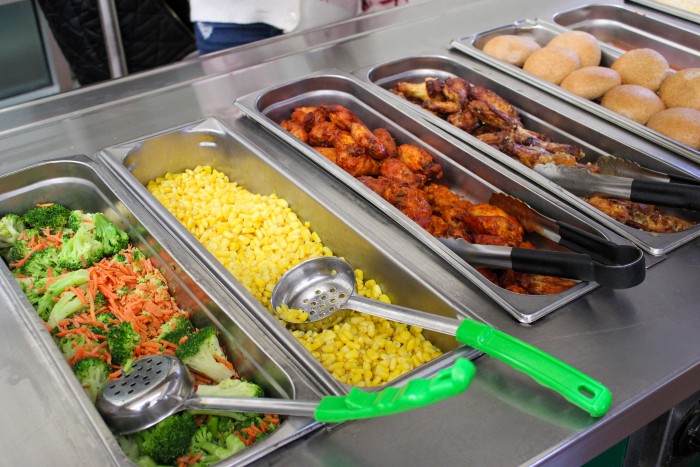
Last year, Congress passed H.R. 1, a sweeping budget reconciliation law that, in part, slashes the Supplemental Nutrition Assistance Program (SNAP) by $187 billion over the next decade.
These cuts have the potential to impact access to child nutrition programs, leaving children more vulnerable to hunger both at home and at school. The SNAP cuts will also complicate school meal operations, increasing paperwork burdens for school nutrition departments, as well as threatening schools’ ability to offer all children free school meals through the Community Eligibility Provision (CEP).

71 school districts (74 percent) reported concerns regarding how cuts to SNAP and Medicaid will affect school meal administration and participation.
Make School Meals Free for Every Student, Everywhere
From boosting participation in school breakfast and lunch to eliminating meal debt and reducing administrative burdens, Healthy School Meals for All delivers meaningful benefits for both children and school nutrition departments.
Free School Breakfast and Lunch For All Students
The Universal School Meals Program Act would make Healthy School Meals for All a reality nationwide. Urge your Members of Congress to cosponsor this critical legislation by using the FRAC Action Network.
Photo Credits:
-
- Atlanta Public Schools, Georgia
- Baltimore City Public Schools, Maryland
- Richmond County School System, Georgia