


Published March 3, 2026
March 2–6 marks National School Breakfast Week — a time to celebrate the power of the federal School Breakfast Program nationwide and to recognize the vital role it plays in helping students learn, grow, and thrive.
In the District of Columbia, that impact is tangible. During the 2024–2025 school year, more than 6.6 million breakfast meals were served to D.C. students, ensuring thousands of children started their day nourished and ready to succeed.
Hear the Crunch
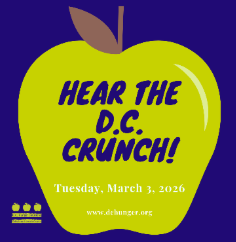
D.C. Hunger Solutions is excited to continue our annual Hear the Crunch celebration! This tradition brings together students, school staff and administrators, elected officials, and community members to show support for the School Breakfast Program in a simple yet powerful way: by taking a bite of an apple.
The symbolism of biting into an apple reminds us that school breakfast is about more than just filling stomachs. It’s about giving every student the healthy start they need. Hear the Crunch demonstrates the District’s collective commitment to accessible, nutritious school meals and builds momentum for stronger school meal policies.
The Benefits of School Breakfast in D.C.
Research consistently shows that students who eat school breakfast experience reduced hunger, improved academic performance, better concentration and memory, increased school attendance, and enhanced overall health and wellness. For many D.C. families navigating the District’s high cost of living, school breakfast provides critical nutrition support that relieves stress on families’ budgets and also sets students up for success.
It has been over a decade since the District adopted the Healthy Schools Act. This monumental legislation ensures all students receive breakfast at no cost. The Healthy Schools Act has transformed how students access school meals through innovative models like breakfast in the classroom and grab and go. The act also provides reimbursement for incorporating a variety of measures to improve student health, including more nutritious school meals; increased physical activity and education; stronger school wellness policy implementation and accountability; and promotion of school health centers.
The District’s commitment to school breakfast can serve as a model for the nation.
Local Food Procurement and Institutional Purchasing
The District’s commitment to school nutrition extends beyond simply providing meals; it’s also about how we source the food our students eat. D.C. Public Schools (DCPS) became the first school district on the East Coast to adopt the Good Food Purchasing Program (GFPP), a national framework that directs institutional buying power toward five core values: local economies, environmental sustainability, valued workforce, animal welfare, and nutrition.
Through GFPP, DCPS works with local vendors and producers to source fresh, nutritious ingredients. This approach supports local economies, strengthens workforce opportunities in the food system, and ensures students receive culturally appropriate, high-quality meals. GFPP connects DCPS with family-owned farms throughout the mid-Atlantic region, bringing fresh produce, sustainably raised proteins, and locally baked goods to school cafeterias.
Universal School Meals in the District
D.C. Hunger Solutions continues to advocate for universal free school meals. That vision took a concrete step forward with the introduction of B26-0108, the Universal Free School Meals Amendment Act of 2025, which seeks to provide free meals and after- school snacks to all District of Columbia students regardless of household income.
Research shows that Universal School Meals policies boost access to school meals, reduce food insecurity, and eradicate stigma for students from families with low incomes. They also eliminate the administrative burden experienced by school food and nutrition staff, who must process meal applications every year, diverting time and resources away from planning, providing, and preparing healthy, nutritious meals for students.
From Hear the Crunch celebrations to universal free school meals legislation, the District has shown what’s possible when schools, policymakers, and communities unite around children’s nutrition. With Supplemental Nutrition Assistance Program (SNAP) cuts in the budget reconciliation law, H.R. 1, limiting families’ food budgets, children will rely more heavily on school meals. To meet this growing need, schools and communities must collaborate to strengthen breakfast programs and increase student participation.
Grab an apple and join D.C. Hunger Solutions for Hear the Crunch this year in support of school breakfast and investing in school nutrition, so every student in the District has access to the healthy food they need to learn, grow, and thrive.
You can celebrate Hear the Crunch in Maryland too! Visit our site to learn more.