


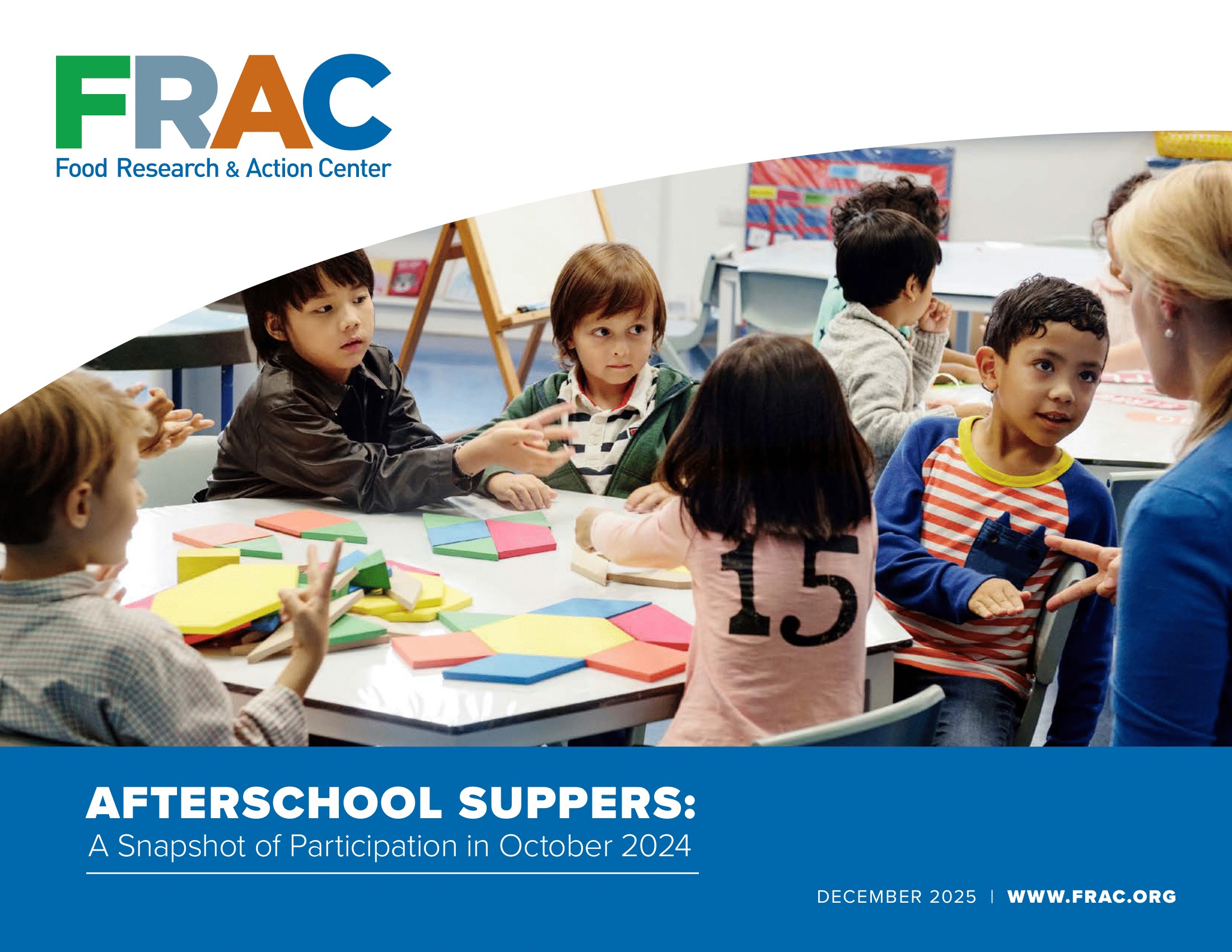
More children are getting the nutrition they need from afterschool snacks and suppers offered by the Afterschool Nutrition Programs, according to FRAC’s latest report, Afterschool Suppers: A Snapshot of Participation in October 2024. Read the strategies in the report to learn how even more children can be reached with these programs.
Key Findings
-
- 1.26 million children received an afterschool supper on an average school day in October 2024, an increase of 34,180 children, or 2.8 percent, when compared to October 2023.
- 1.24 million children received an afterschool snack, a decrease of 10,770 (1 percent) children from October 2023.
- 44,911 sites served afterschool suppers and/or snacks in 2024, a decrease of 1,397 sites from 2023.
How the Afterschool Nutrition Programs Work

The Afterschool Nutrition Programs play a critical role in helping to reduce hunger and support high-quality enrichment programs by providing healthy meals and snacks to children to ensure they are fed after school, on weekends, and during school holidays.
Two federal programs funded by the U.S. Department of Agriculture – the Child and Adult Care Food Program and the National School Lunch Program – provide funding to serve suppers and snacks to children at educational and enrichment programs.
The Afterschool Nutrition Programs not only help stretch limited family food budgets, but they also ensure children have the nutrition they need to learn and thrive. For working parents, they provide peace of mind that children are in safe, structured environments with access to healthy food.

Did you know?
The Afterschool Snack Programs began in 1998, and suppers became available nationwide in 2010 through the Healthy, Hunger-Free Kids Act.
Understanding Shifts in Afterschool Meal Participation
Participation in afterschool suppers saw only modest growth in October 2024, while snack participation declined, the number of sites serving meals decreased, and overall participation remains below pre-pandemic levels.
Funding boosts for afterschool programs during the pandemic created new opportunities, but those investments have largely expired. Funding remains inadequate. At the same time, too many existing afterschool programs are still missing out on the opportunity to better meet children’s nutritional needs.
Fueling Futures: Investing in Afterschool Programs
To meet the growing need and improve access, long-term policy improvements must be made. Explore the tabs below to learn more about FRAC’s afterschool policy recommendations on the national, state, and local level.
Federal Policy Recommendations
- Streamline the Afterschool and Summer Nutrition ProgramsMany community-based organizations and local government agencies must switch between operating the Afterschool Meal Program under the Child and Adult Care Food Program and the Summer Food Service Program (SFSP), often serving the same children throughout the year. Operating two separate programs with different eligibility criteria and requirements creates duplication and administrative burden. Consolidating these into a single year-round program under SFSP would streamline operations and allow sponsors to reach more children effectively.
- Allow School Food Authorities to Serve Suppers Through the National School Lunch ProgramStreamlining the Afterschool Nutrition Programs by allowing schools to provide up to a meal and a snack any day during the regular school year through the NSLP, similar to the flexibility offered through CACFP, would incentivize more schools to serve meals.
- Lower the Area Eligibility ThresholdLowering the area eligibility threshold to 40 percent would extend eligibility to more communities and align afterschool nutrition with other federal education and enrichment programs, including Title I and 21st Century Community Learning Centers.
State and Local Policy and Program Opportunities
- Mandate ParticipationSeveral states have passed laws requiring schools in low-income areas to participate in federal child nutrition programs. Virginia and Maine have led the way by mandating that schools with afterschool programs also serve meals.
- Allocate FundingA handful of states supplement federal reimbursement rates or provide grants for equipment and start-up costs to support school and summer meal programs. Expanding these investments to afterschool suppers and snacks can make participation more sustainable and accessible for schools and community organizations.
- Engage School DistrictsSchools have extensive experience administering the child nutrition programs and often operate afterschool activities that are eligible to participate in the Afterschool Nutrition Programs. State agencies and advocates can boost participation by identifying eligible districts, addressing administrative challenges, and offering technical assistance.
- Serve Suppers Instead of (Or In Addition to) SnacksOffering a full supper — rather than just a snack — more effectively improves nutrition and significantly increases federal reimbursement, helping programs remain financially viable. When afterschool programs run for several hours, providing both supper and a snack is a best practice.
- Improve Meal Quality and AppealAll suppers and snacks provided through the Afterschool Nutrition Programs must adhere to federal nutrition standards. Sponsors can enhance the quality of the meals they offer by following FRAC’s Afterschool Standards of Excellence, as well as by incorporating fresh, seasonal produce through Farm to Afterschool initiatives.
- Reduce BarriersFor example, long travel distances may make it challenging for some children to stay after school, even when programs are offered. To alleviate this barrier, schools can work to adjust bus schedules to allow for meal service and an enrichment activity before buses leave. Schools also can consider serving meals immediately after the bell rings in the classroom, alongside homework help.
- Build PartnershipsCollaboration with libraries, parks and recreation departments, YMCAs, and other community-based organizations can expand the number of sites offering afterschool meals. Partnerships help reach children who may not stay at school but still need a safe place to go with access to food and enrichment.
- Increase Outreach and AwarenessParents and guardians may not be aware of meal availability. Clear communication through schools, community organizations, and local media can boost participation.
Afterschool Resources
Afterschool Suppers: A Snapshot of Participation – October 2024
Read the latest report
Afterschool Suppers – A Snapshot of Participation, October 2023
Read our last report on afterschool meals and snacks
Afterschool Suppers – A Snapshot of Participation, October 2021 and October 2022
Read the report